This workshop offers the opportunity to recreate a Roman pavement using the direct mortar technique, under the supervision of a master mosaicist. Participants will learn how to cut materials with a hammer, prepare and select tesserae, and analyze ancient and modern andamenti. They will learn to manage rhythm, continuity, and movement in the composition, while developing their sense of form, color, and texture. Theory will be immediately put into practice, allowing participants to master essential techniques and create a pavement faithful to the principles of classical mosaic.
Upon completion of the workshop, participants will be able to:
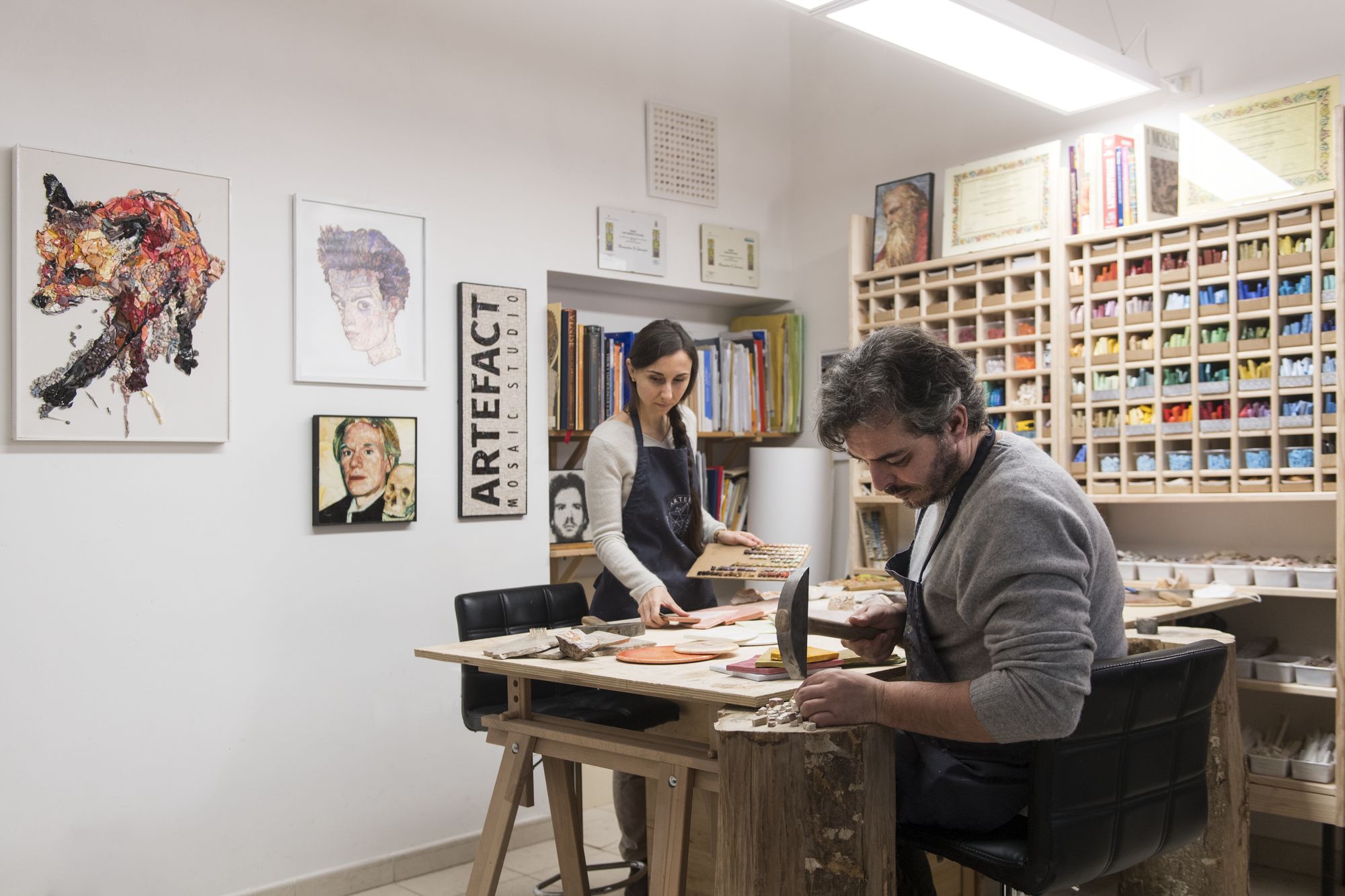
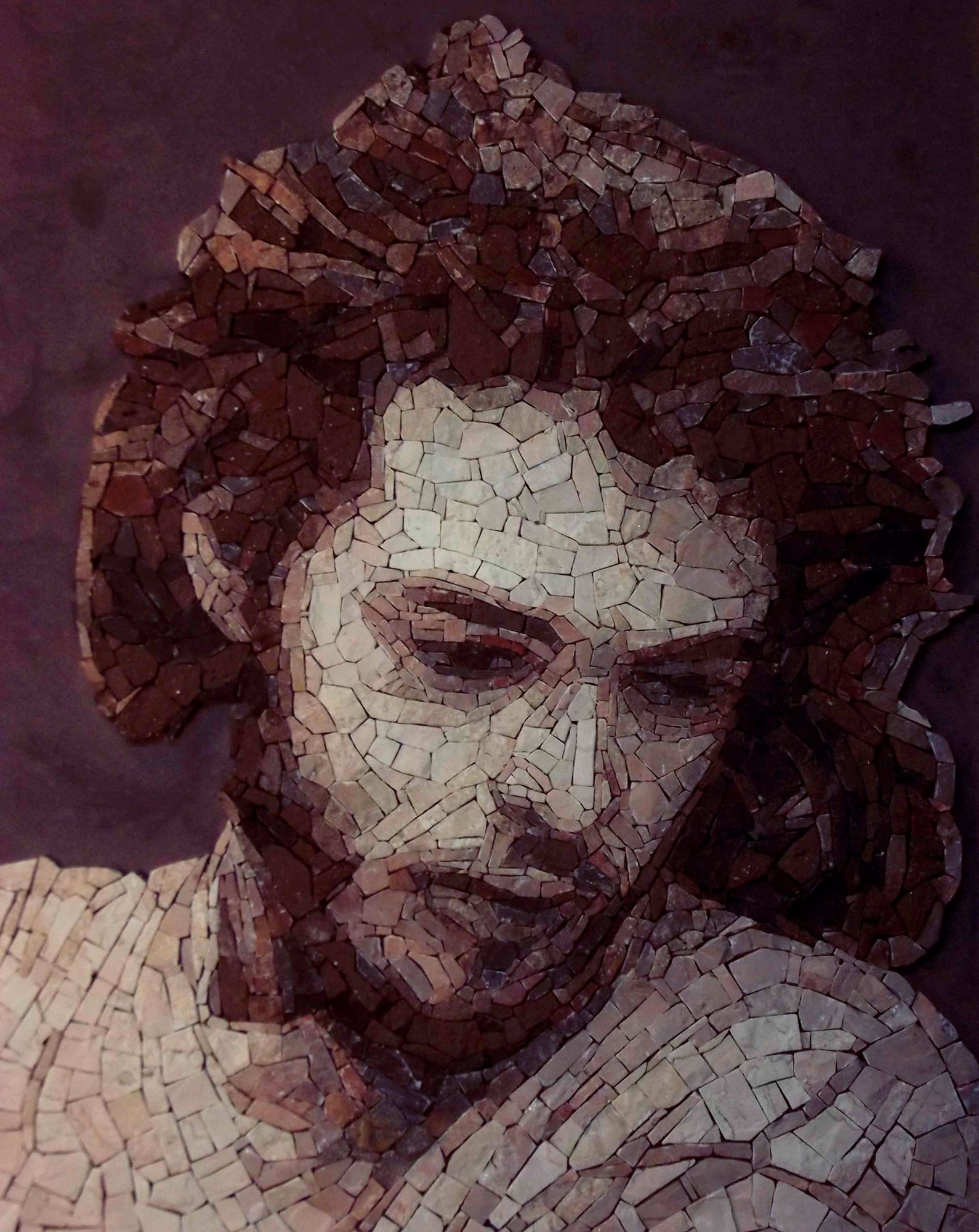
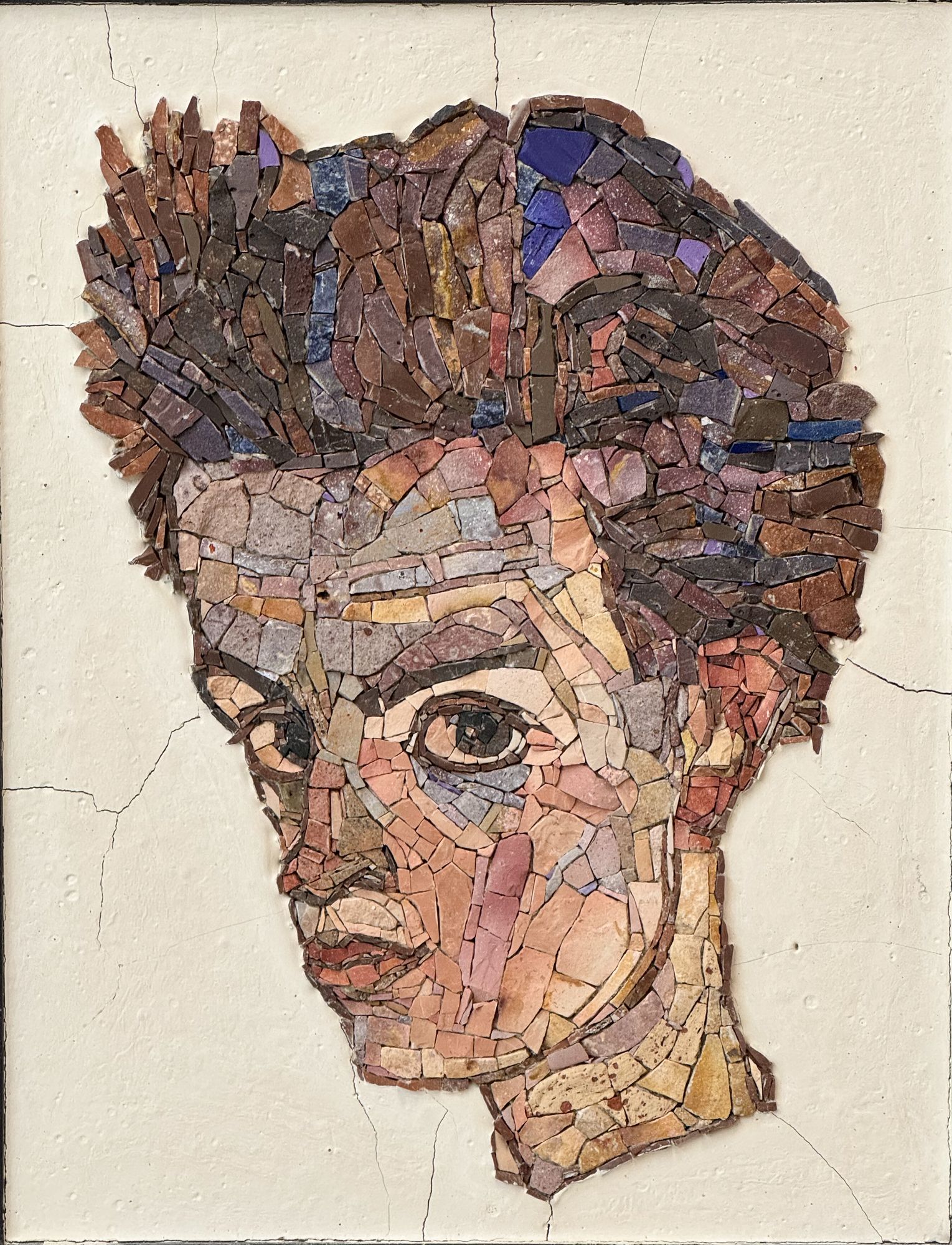
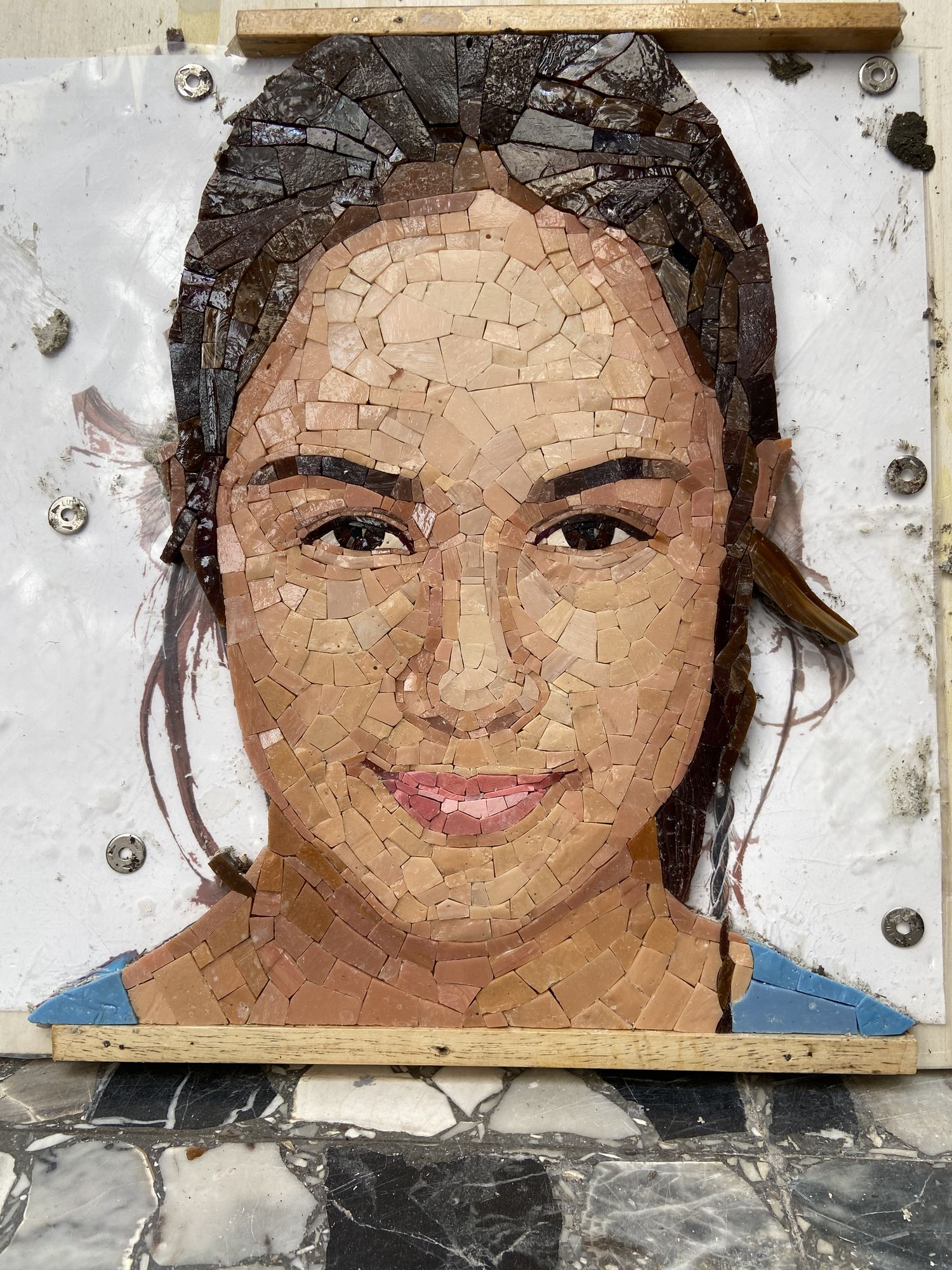
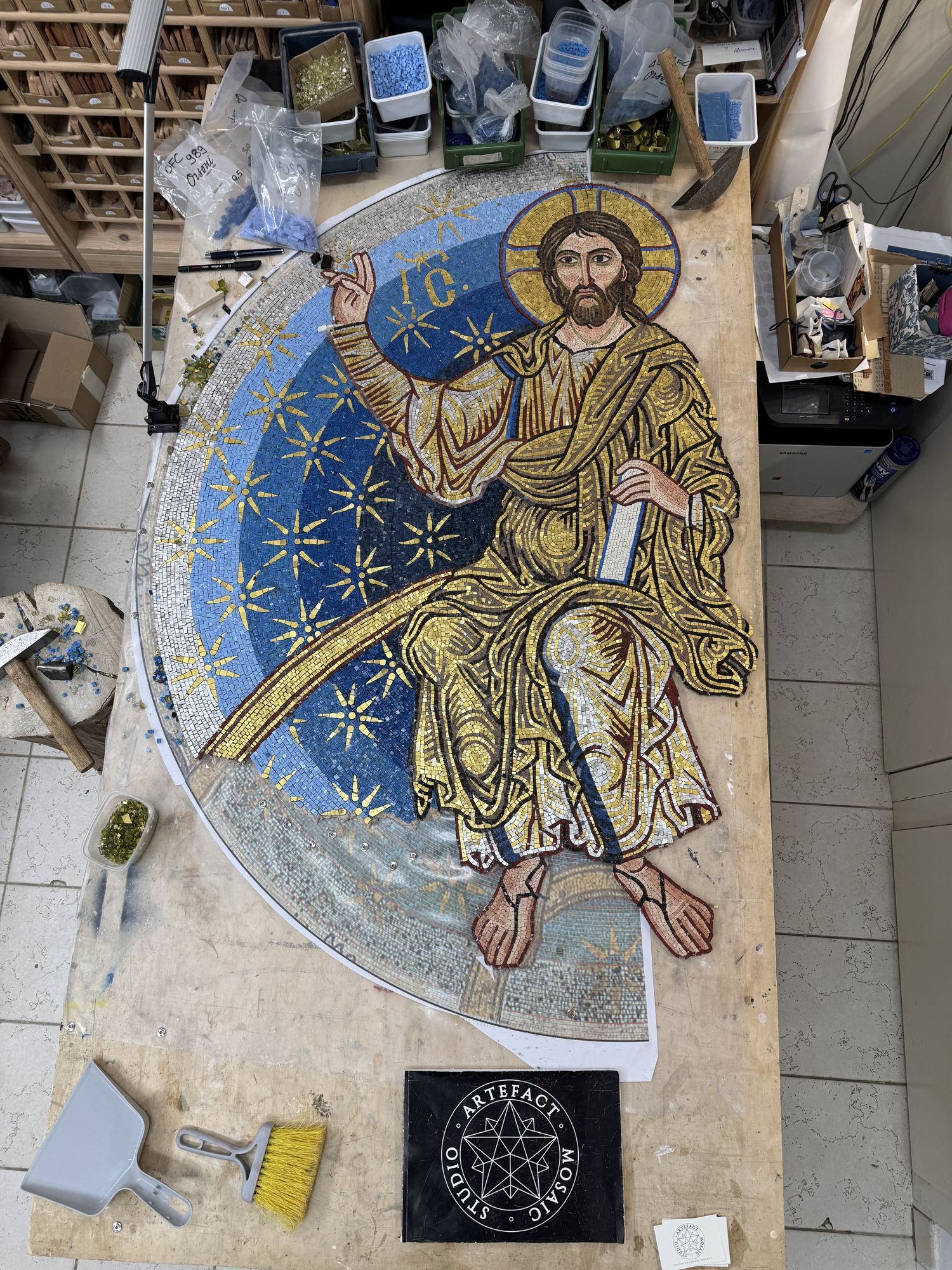
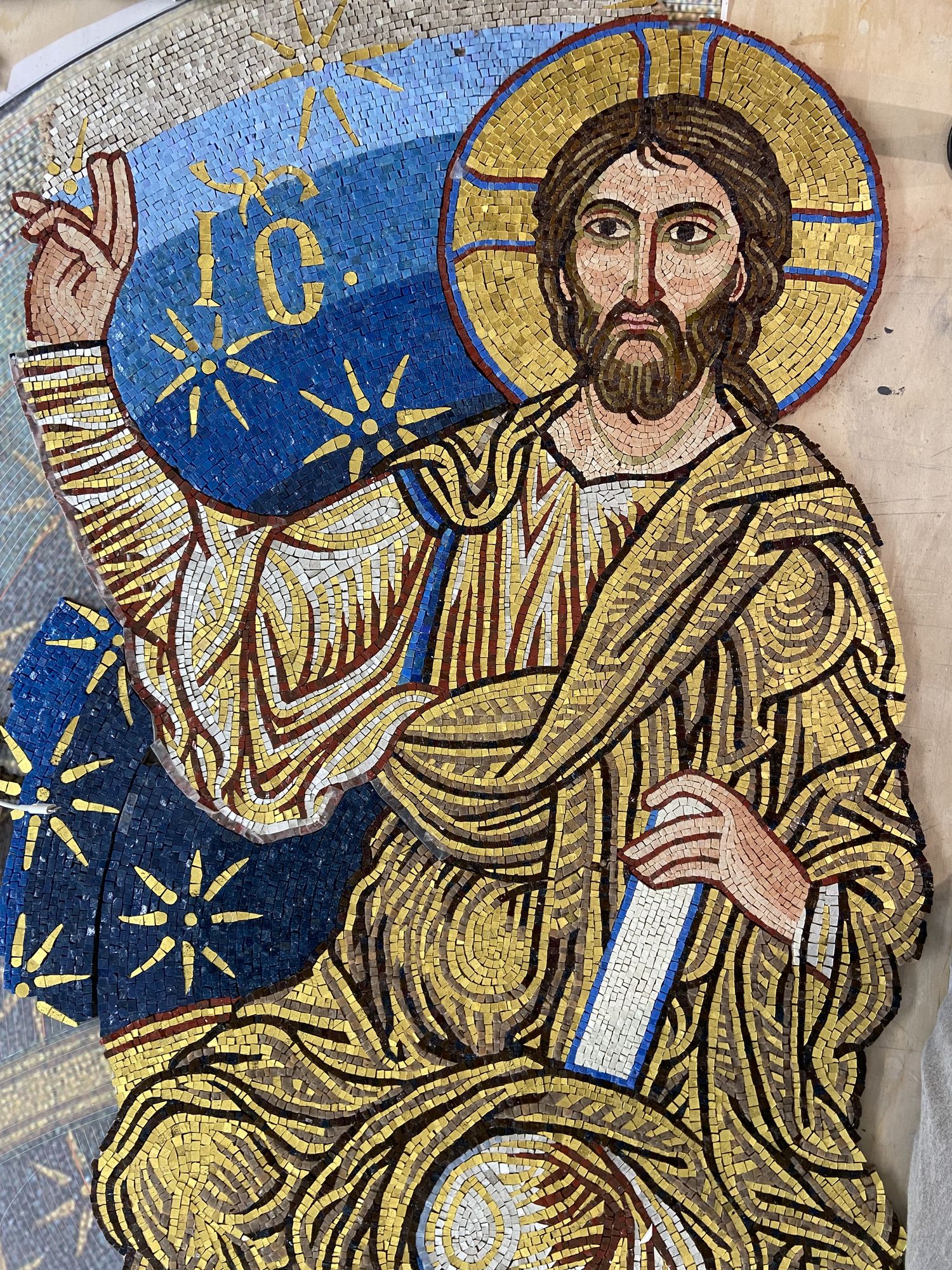
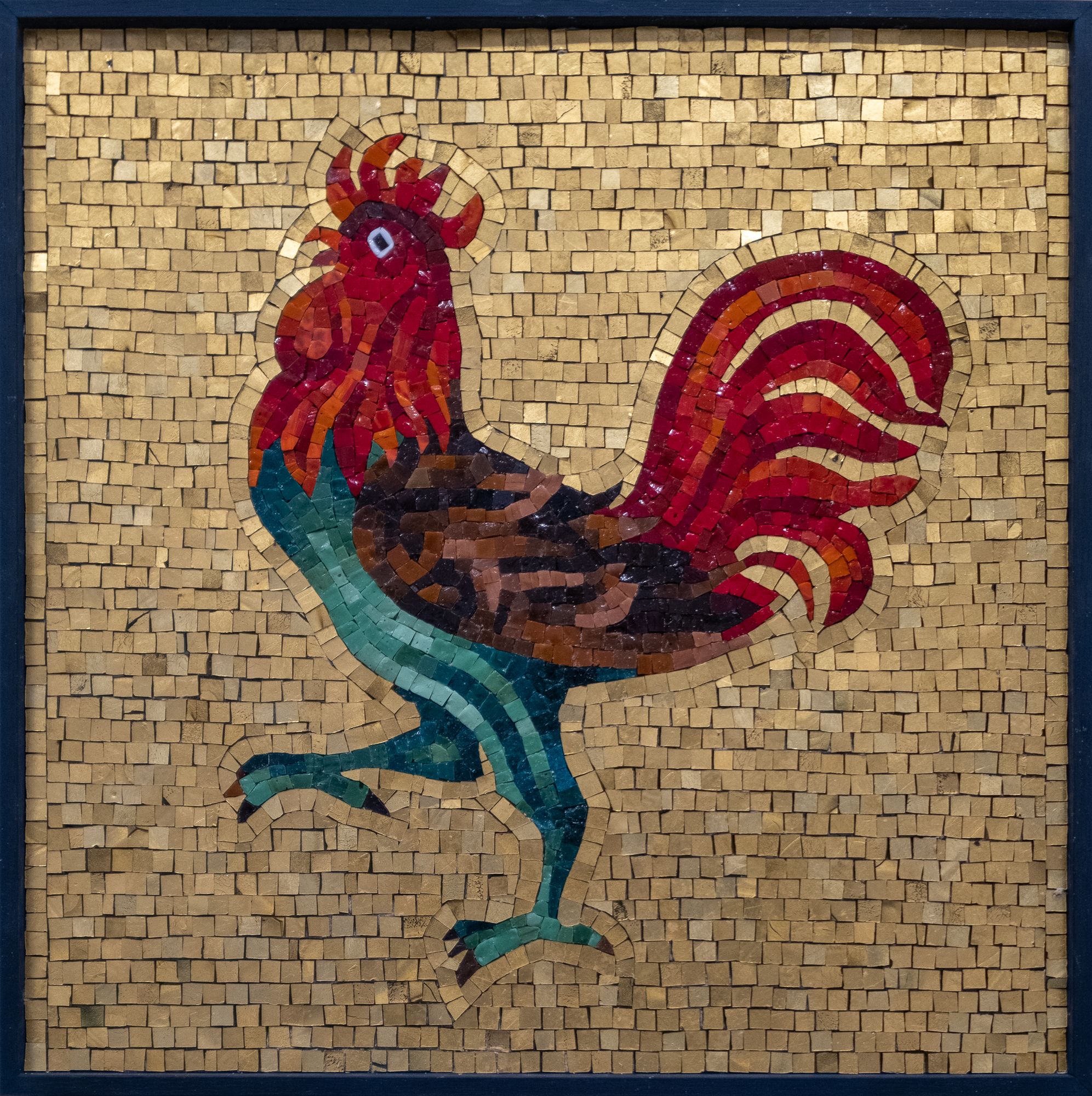
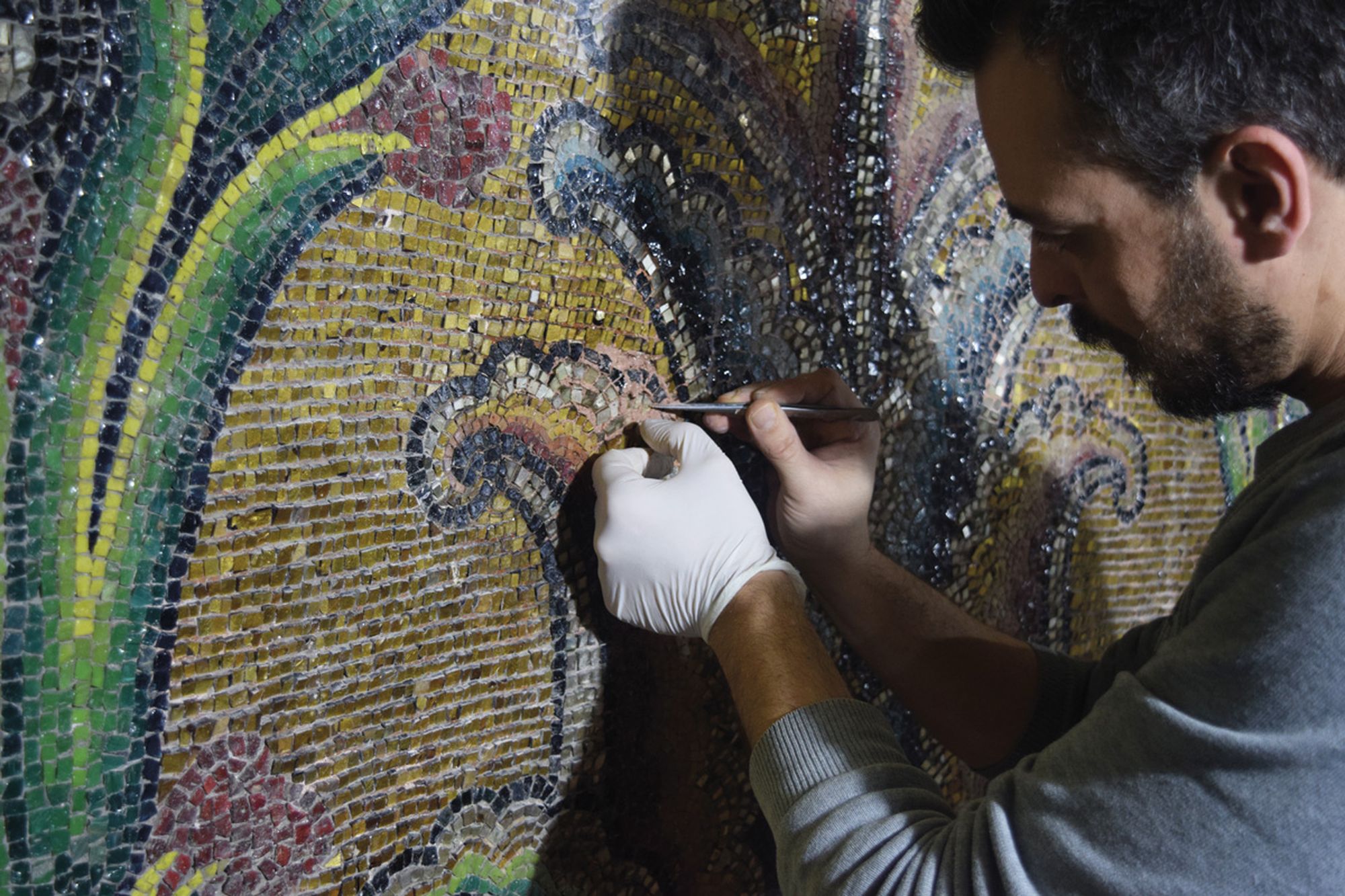
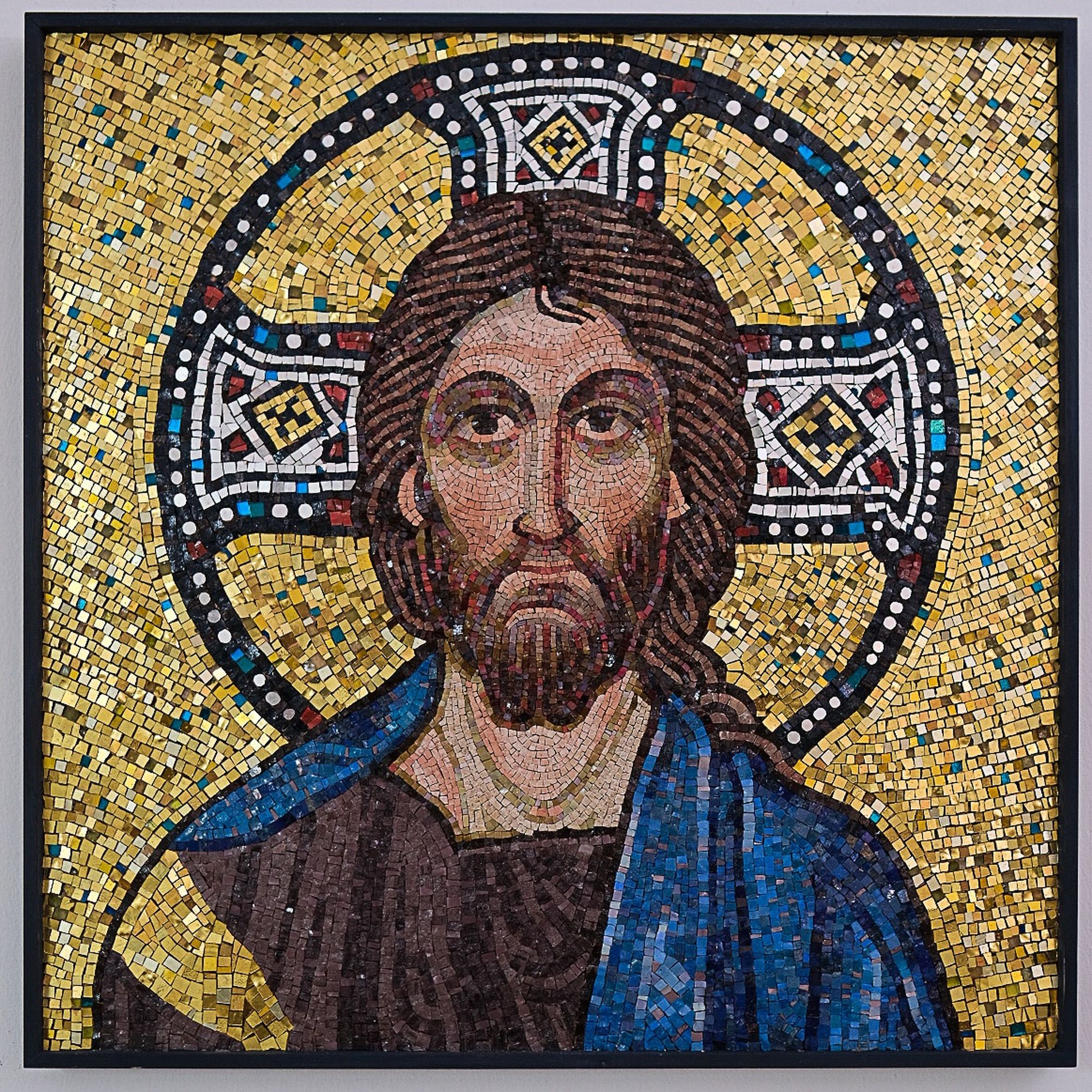
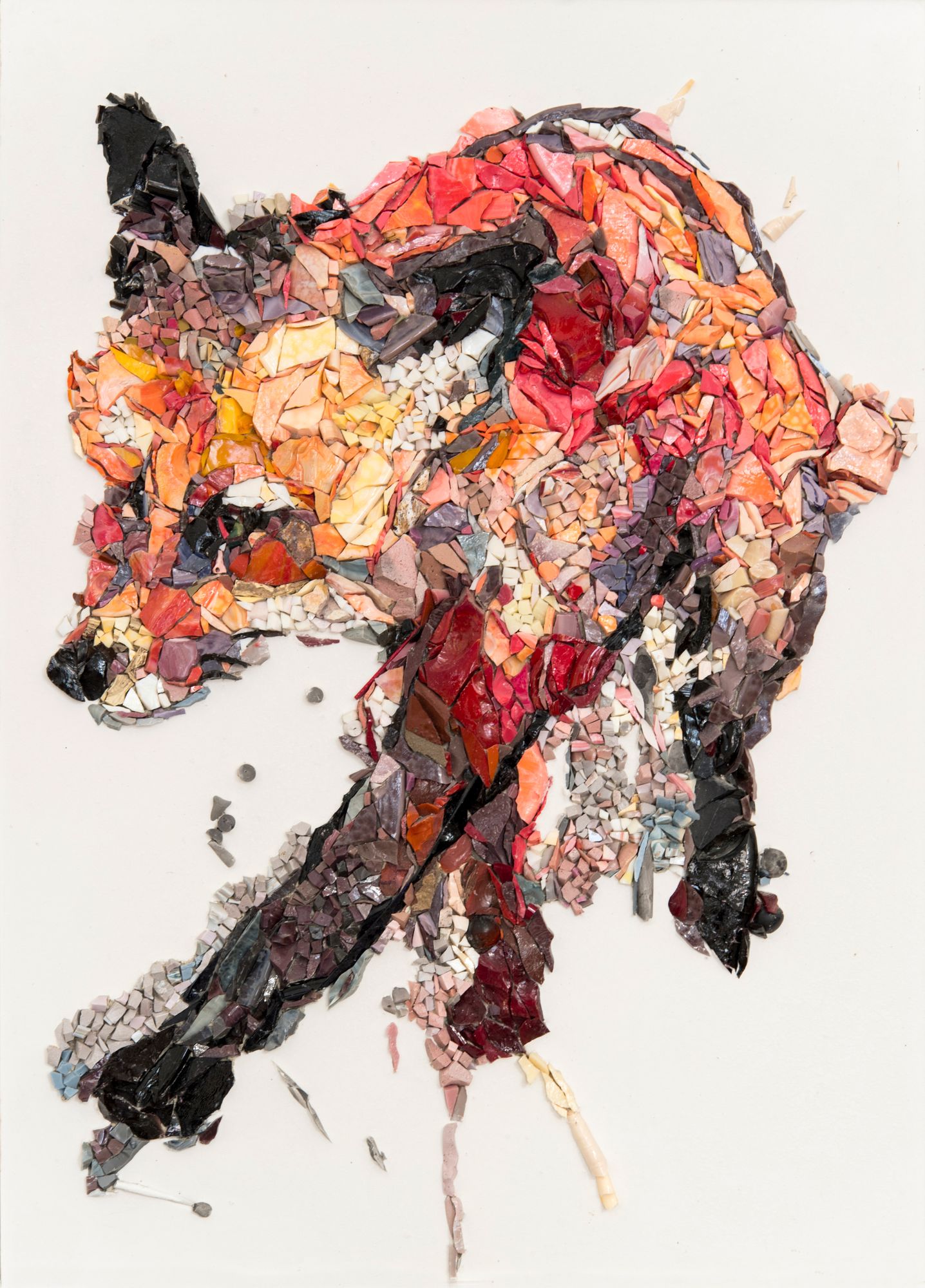
Throughout the sessions, participants will learn the essential basics of mosaic techniques, both traditional and contemporary. They will begin by learning how to use a hammer to precisely cut the materials, then discover how to prepare and select tesserae according to their function and the desired visual effect.
The study of andamenti, the movement and arrangement of tesserae, will be a key element of the program. Participants will explore the classic patterns of ancient pavements, analyze the characteristics of Roman andamenti and the solutions used in ancient mosaics, and then examine modern variations to understand their evolution. They will also learn to interpret the principles of rhythm, continuity, and direction of movement, essential for designing a harmonious and legible pavement.
The training will then include in-depth work on composition using the direct technique. Participants will develop their sense of form, color, and texture through a series of exercises integrated into the final project. An introduction to the main rules for reading a mosaic will allow them to understand the visual and structural challenges inherent in this art form.
Each theoretical concept will be immediately applied in the workshop, facilitating the acquisition of skills. Thanks to this progressive and practical approach, participants will be able, by the end of the training, to understand, analyze, and reproduce a mosaic pavement while respecting the fundamental principles of classical mosaic.
Morning
Afternoon
Morning
Afternoon
Morning
Afternoon
Morning
Afternoon
Morning
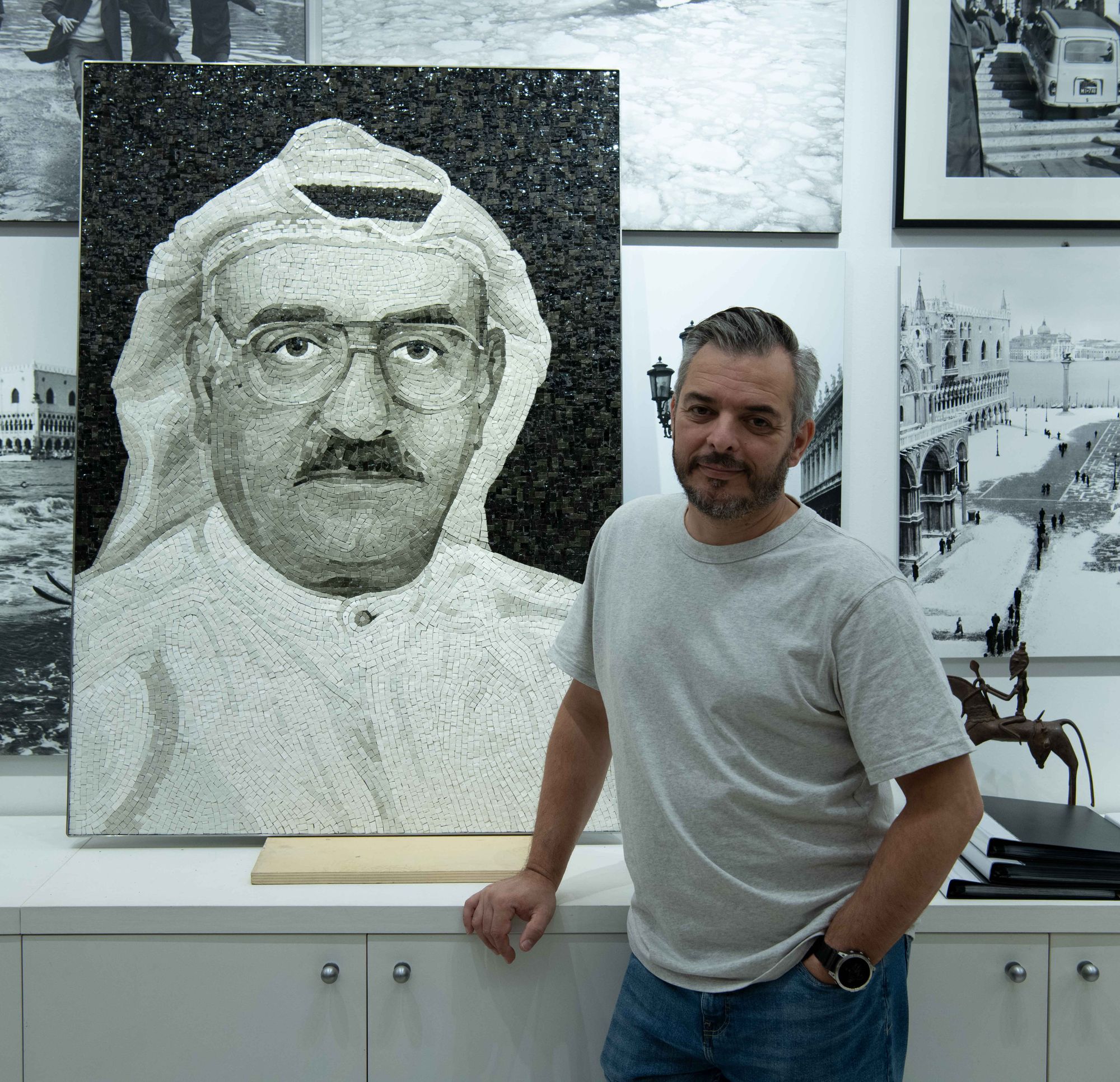
Romuald Mesdagh, an Italian-Belgian master mosaicist, graduated from the prestigious Scuola Mosaicisti del Friuli, where he earned the title of Master Mosaicist. After studying painting, drawing, and photography in Belgium and Spain, he furthered his studies in Italy, where he was selected as one of the top six students in his graduating class. He then pursued advanced specialization and contributed to official commissions for the school.
In Venice, he co-founded Artefact Mosaic Studio with Alessandra Di Gennaro. The studio is dedicated to creating handcrafted mosaics in Murano glass and select marbles, ranging from realistic portraits to works for residential, religious, and design projects. Recognized for his expertise, he collaborates with prestigious brands like Tod’s and exclusively creates custom mosaics for private and institutional clients in the United States, Kuwait, Hong Kong and South Korea.
Training 100% financeable by AFDAS, or partially covered by AGEFICE.
AFDAS can fully fund training courses conducted outside of France, under certain conditions.
This program is for affiliated or registered artists and authors, as well as performing arts professionals working on a freelance basis.
If you are eligible, we encourage you to contact our sales department beforehand via the "Information Request" form to prepare your application, or to register directly through the page of your chosen training course.
Isola di San Servolo,
1, Venice, Italy 30124
T: +33 (0)3 86 45 23 42
contact@campusmana.com