






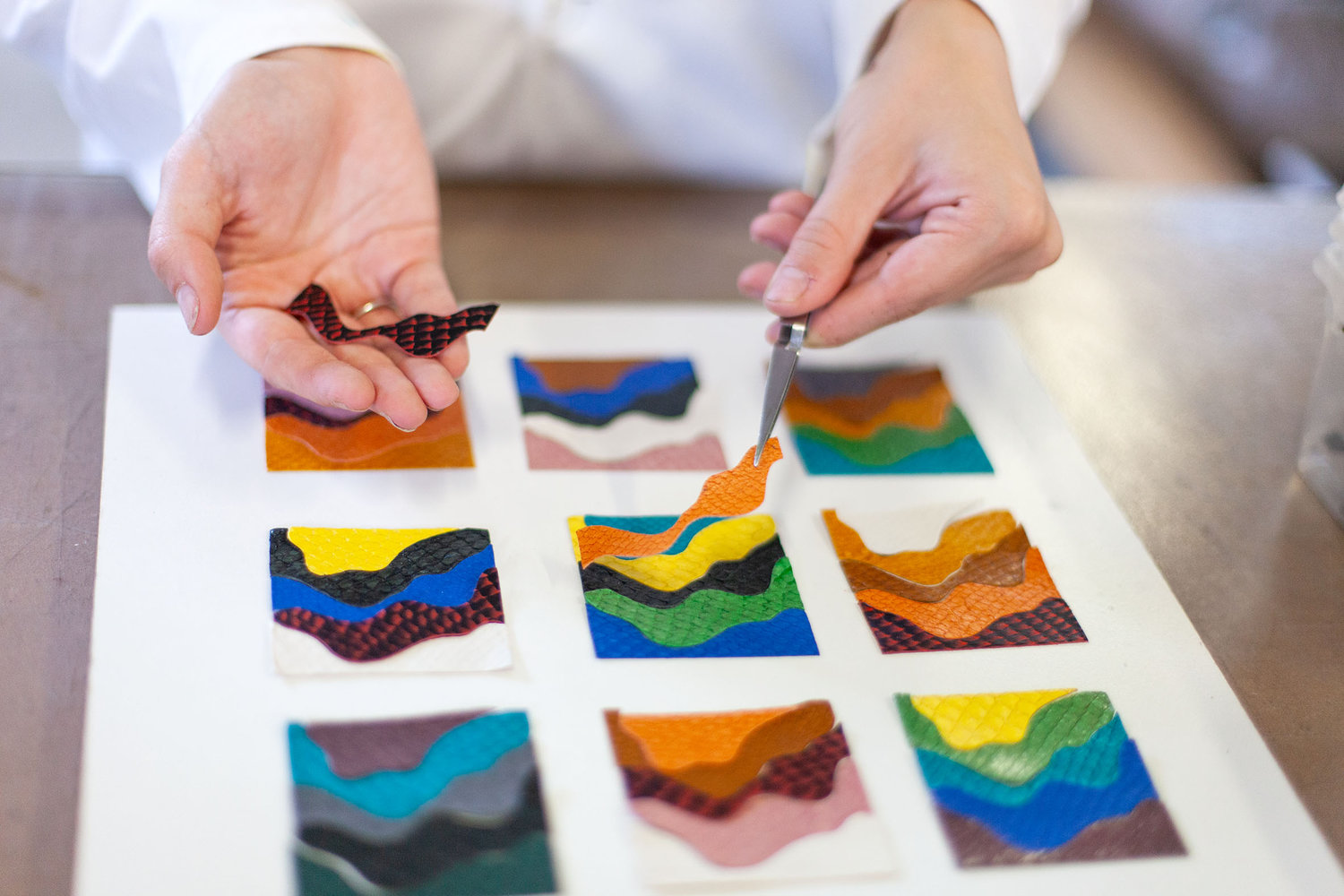
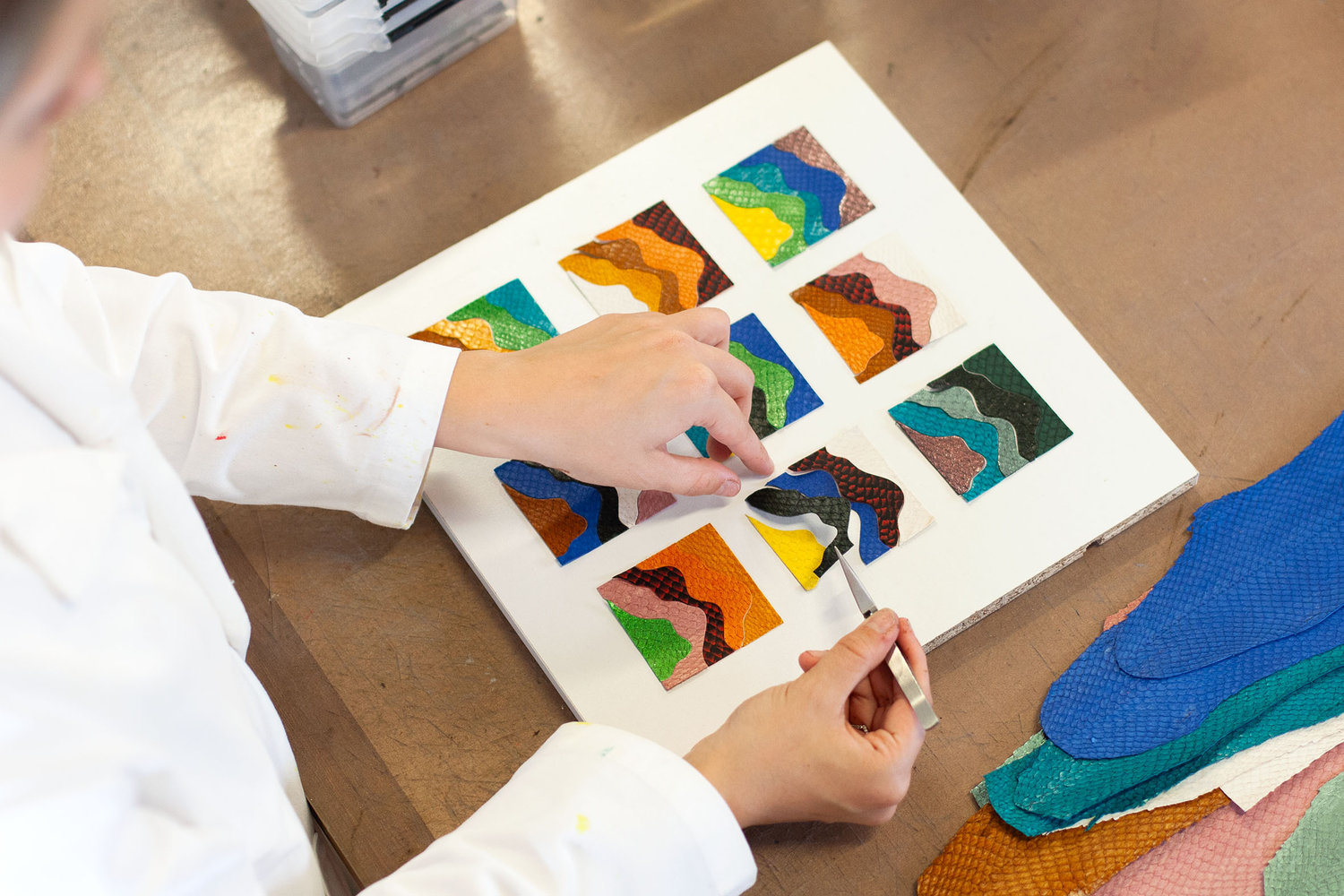
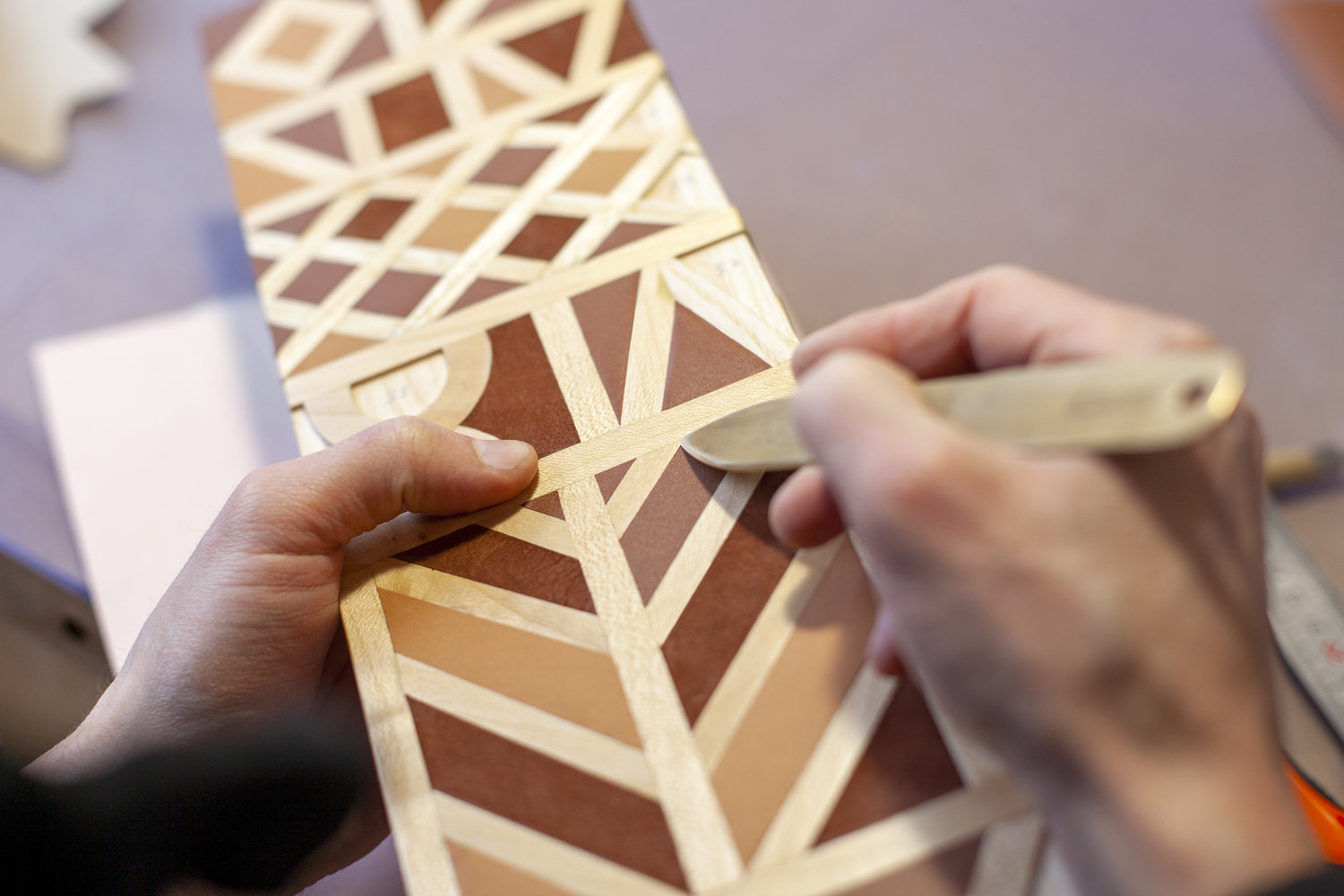
This introductory course invites you to discover the refined art of leather marquetry, a decorative technique that involves precisely assembling different pieces of leather to create elegant and unique patterns. Blending traditional leatherwork with the decorative arts, this discipline combines artisanal skill, creativity, and technical precision.
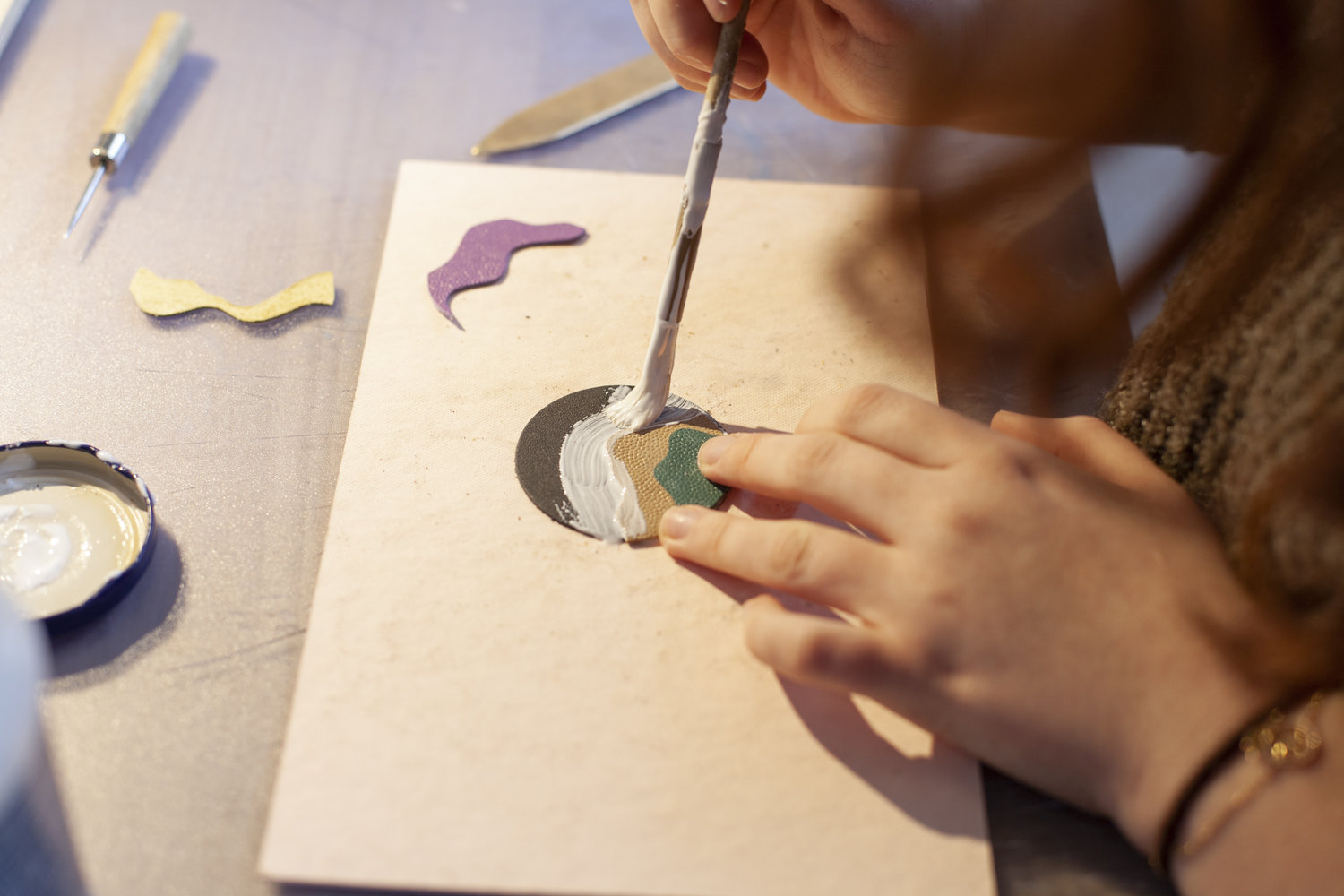
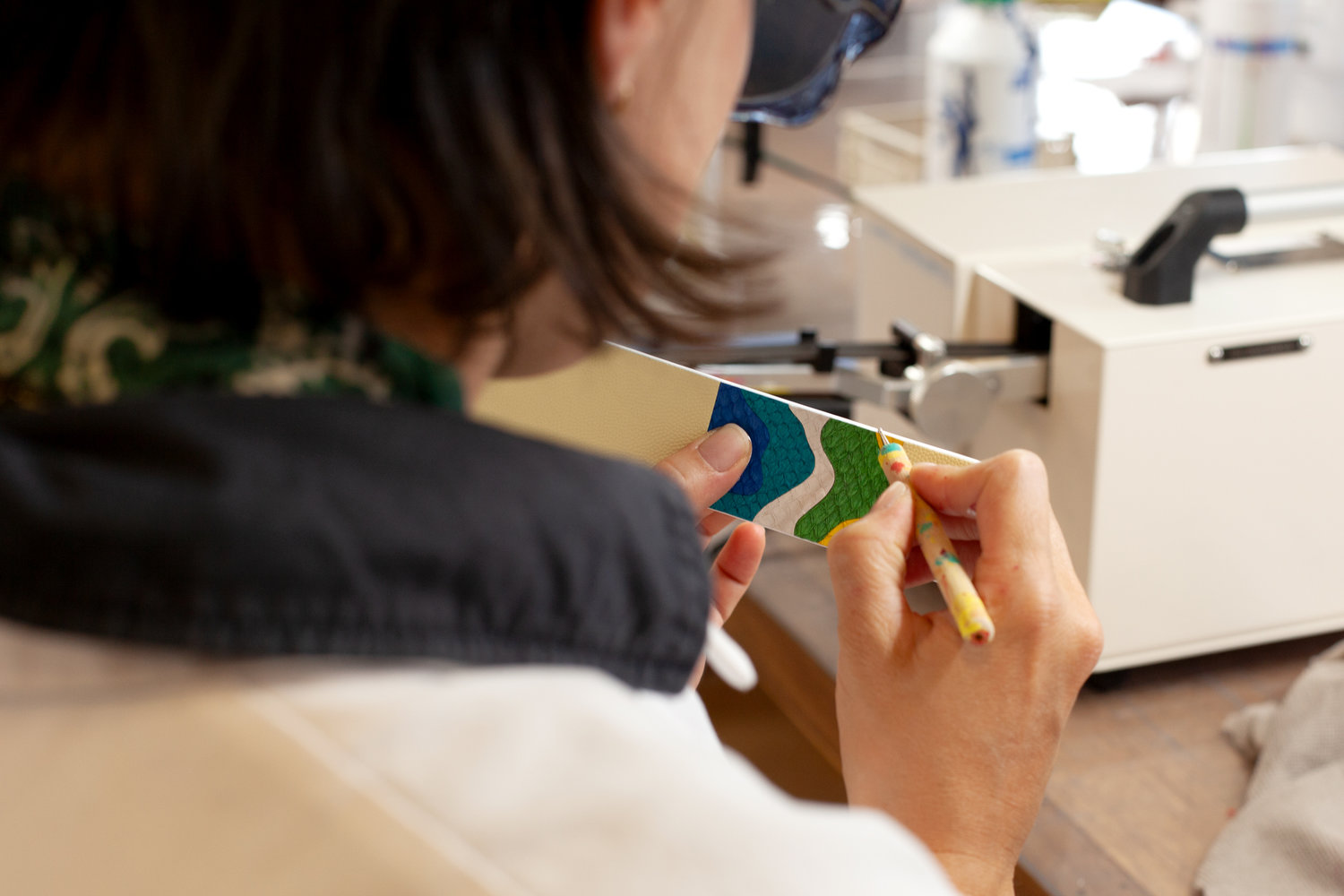
Over the course of the sessions, participants will learn the essential basics of leather marquetry: material selection, cutting techniques, assembly, and finishing. Through a step-by-step, hands-on approach, everyone will create their first piece and leave with a personal creation, all while discovering an exceptional craft.
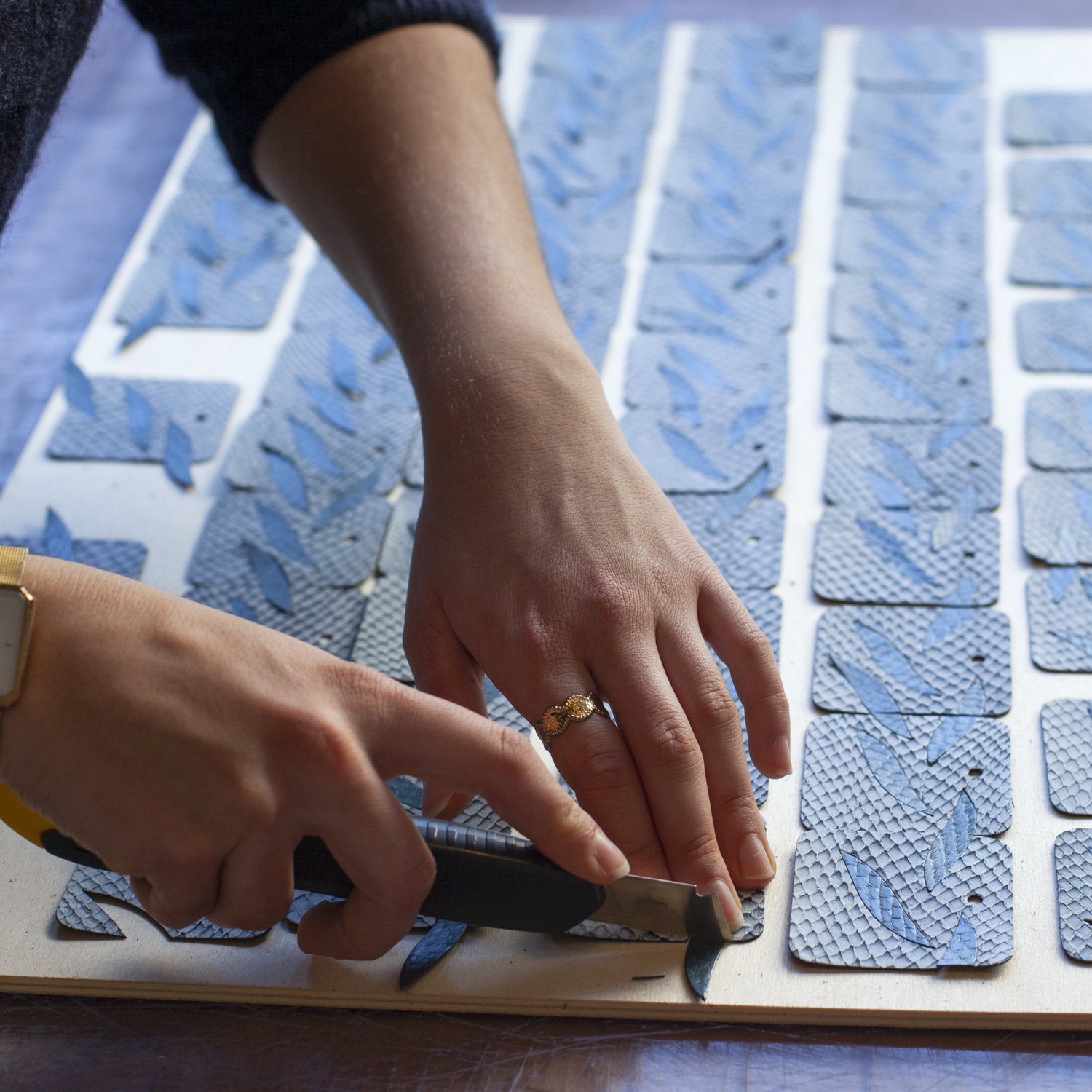
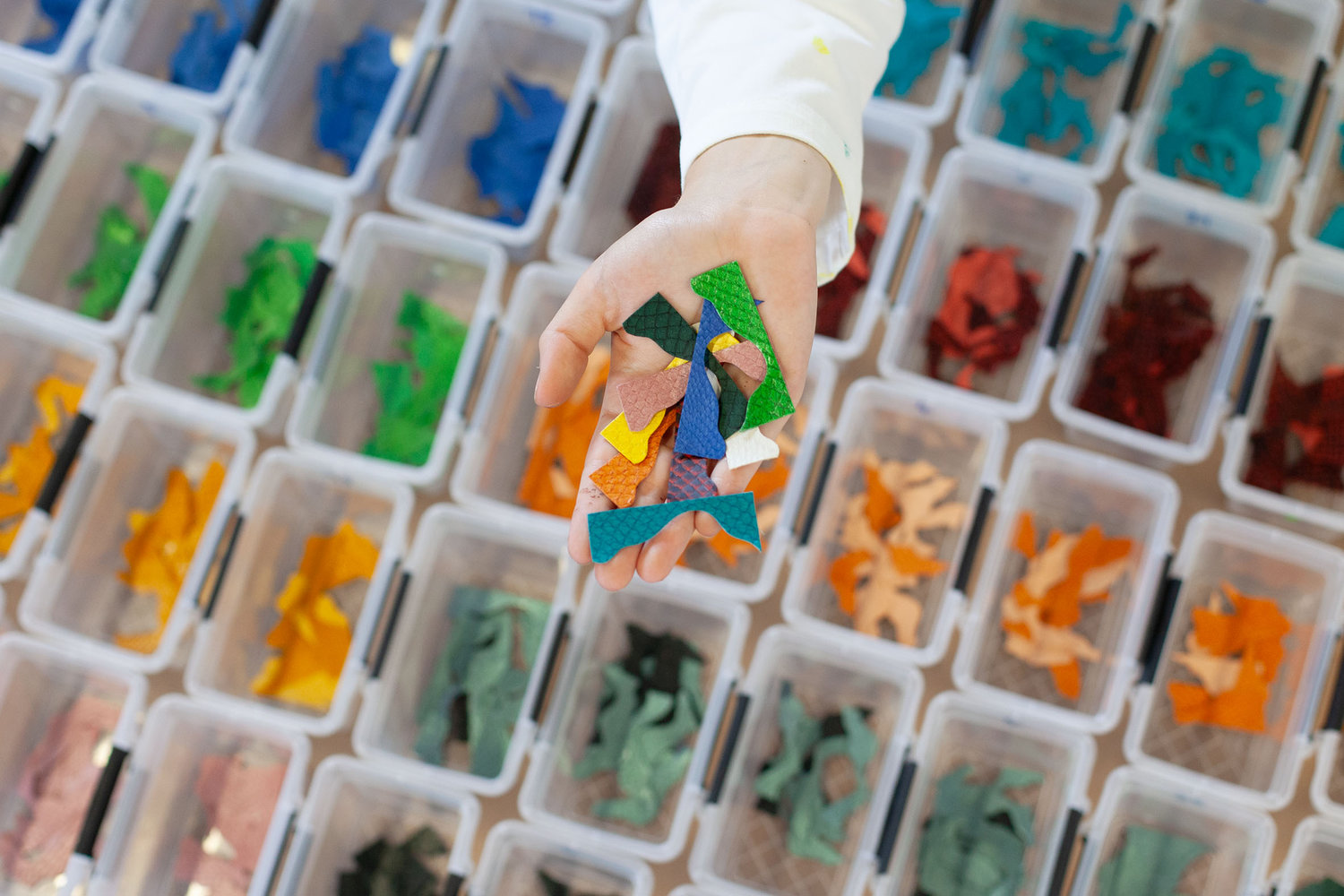
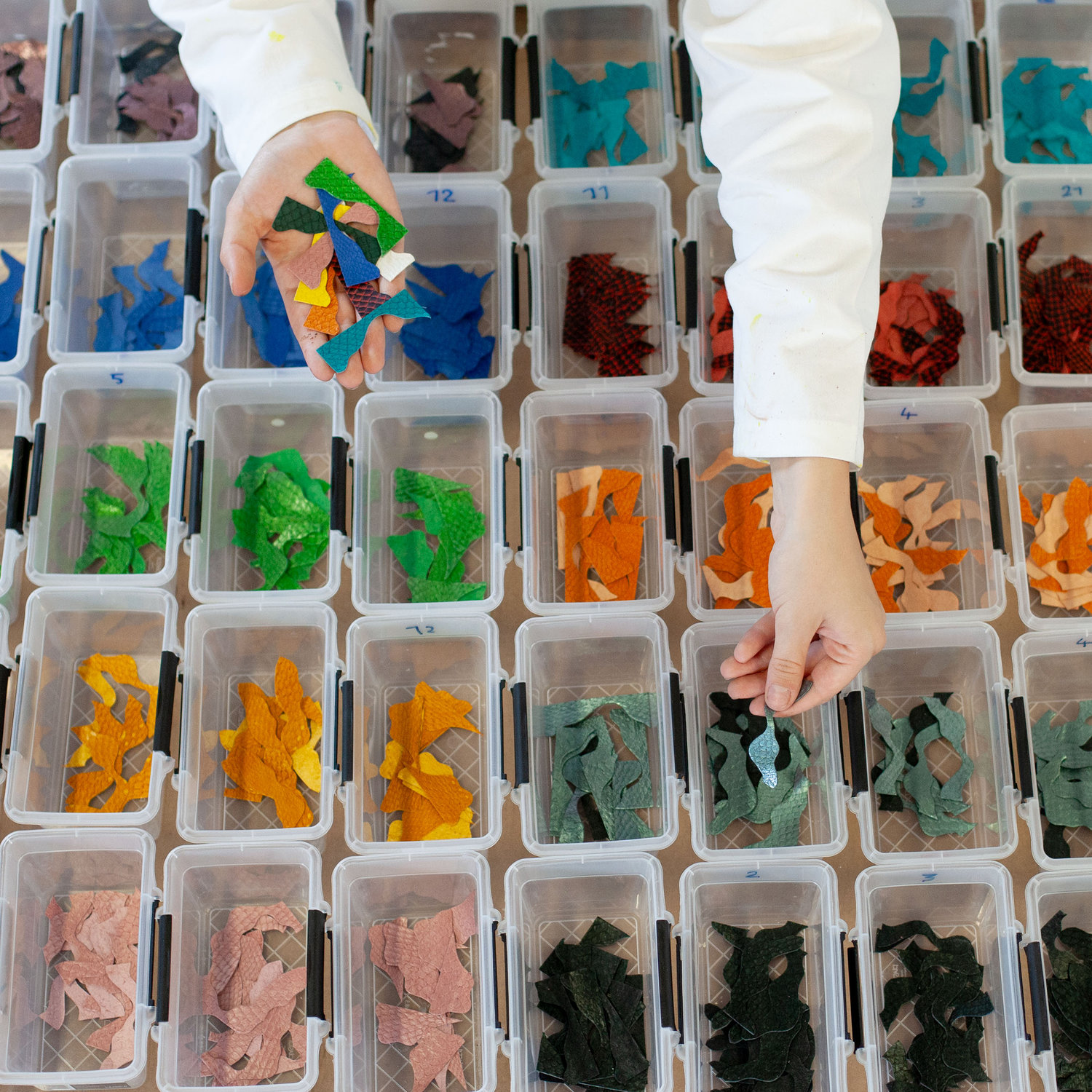
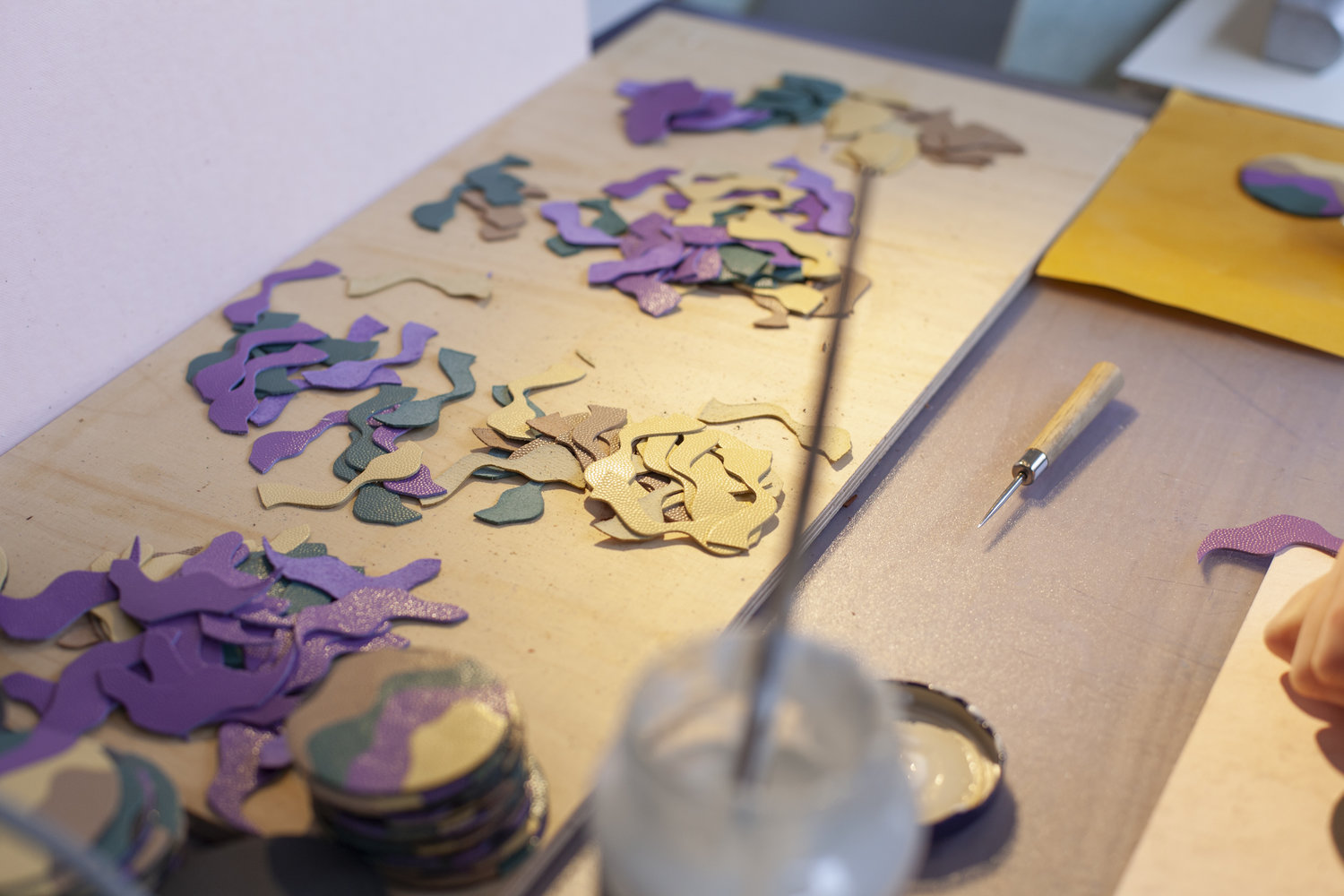
Leather marquetry also allows for the reuse of leather scraps. Thus, this process of repurposing contributes to a sustainable and environmentally friendly approach.
By the end of the course, the trainee will be able to:
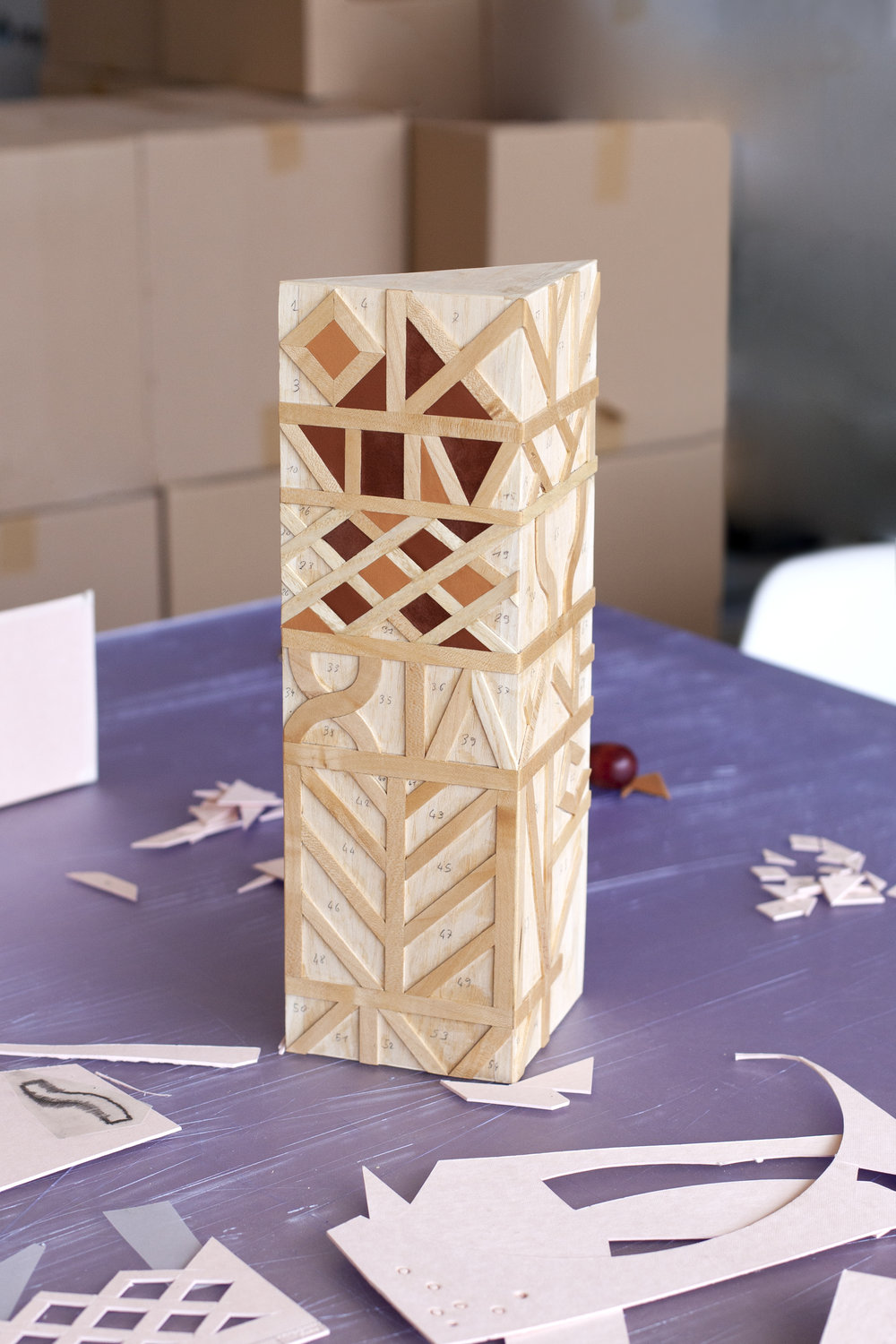
This course offers an introduction to leather marquetry, a delicate artisanal technique that involves creating decorative designs by assembling thin pieces of leather cut with precision. Blending traditional craftsmanship with contemporary design, this practice reveals the full richness of leather through the interplay of shapes, colors, and materials.
Stemming from the ancient traditions of decorative marquetry, which emerged in the 17th century in furniture and precious objects, leather marquetry has gradually established itself in the world of high-end leather goods. Used by art workshops and luxury houses, it transforms leather into a true medium for artistic expression, where every detail contributes to the elegance of the composition.
Designed as an accessible and immersive introduction, this workshop will allow participants to discover the tools, materials, and essential techniques specific to this demanding discipline. Trainees will learn to design a pattern, prepare the various pieces, master cutting and assembly techniques, and then apply meticulous finishes to achieve a harmonious and durable result.
Beyond technical training, this experience will also offer an opportunity for creative exploration and an introduction to the world of arts and crafts. By the end of the sessions, each participant will have created their first leather marquetry piece and acquired the necessary foundations to continue practicing this meticulous and inspiring craft.
Morning
Afternoon
Morning
Afternoon
Morning
Afternoon
Morning
Afternoon
Morning
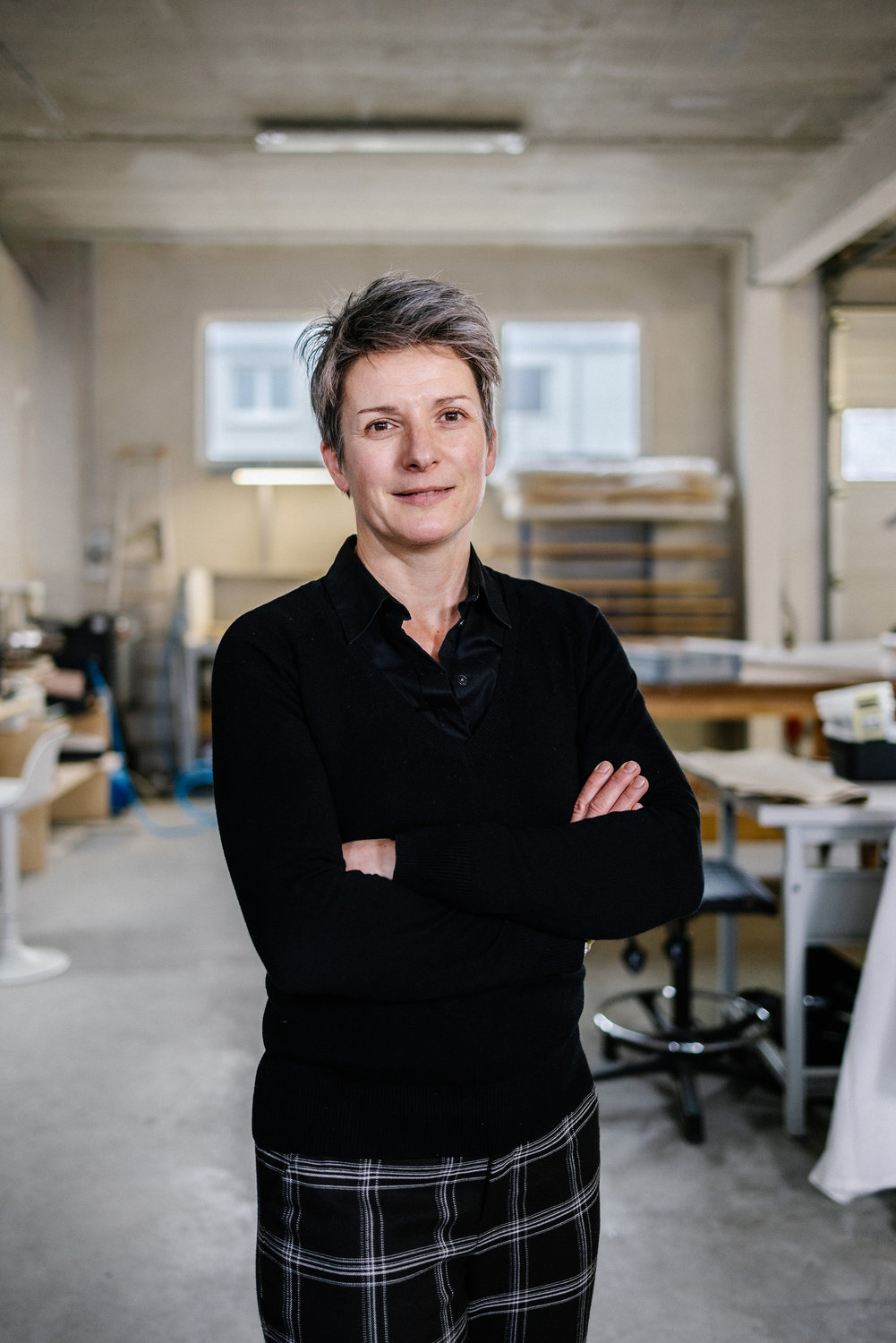
In Strasbourg, behind the evocative name Atelier Reverdie, a breath of fresh air is sweeping through the world of artisanal crafts. Borrowed from medieval poetry celebrating the return of spring, the term “reverdie” encapsulates Pierre Roux’s ambition: to create a dialogue between artisanal heritage, contemporary design, and sustainable innovation.
Founded in 2019, this French artisanal leather goods workshop has quickly established itself as a unique player in the world of artisanal crafts. Here, leather is not limited to the creation of luxury goods: it becomes a medium for creation, a canvas for experimentation, and a meeting ground for other forms of craftsmanship. Wood, brass, glass, and textiles thus enrich bespoke pieces designed for the luxury, design, fashion, and hospitality sectors.
At the heart of this venture, Pierre Roux has followed an unconventional path. Born into a family of cabinetmakers, he grew up in an environment where craftsmanship and materials took center stage. Initially trained in photography, he began his career in the museums of the City of Paris. This formative experience refined his artistic vision and gradually deepened his passion for artisanal craftsmanship. After earning a vocational certificate in ceramics and training in Mexico, he opened his first workshop-boutique in Strasbourg before shifting his focus to leather goods under master artisan Christian Débat at the Delaforêt workshop.
This journey now shapes the hybrid identity of Atelier Reverdie: a place where craftsmanship, design, and research are in constant dialogue. There, Pierre Roux develops rare skills, from artistic leatherwork to leather marquetry, a meticulous technique he is helping to bring back into fashion. His approach appeals to a discerning clientele seeking unique pieces produced in small and medium-sized batches.
But the workshop’s ambition extends beyond mere creation. In an industry facing environmental challenges, Reverdie champions a responsible approach. Leather scraps are systematically sorted, reused, or transformed into new objects. The workshop also assists other professionals in repurposing their surplus flexible materials. Pierre Roux further explores alternative and sustainable materials, such as fish leather, affirming a contemporary vision of luxury where innovation and eco-design are inseparable.
Certified by Ateliers d’Art de France, the workshop carries out all of its production in eastern France, drawing on a network of exceptional French, German, and Italian artisans. This collaborative dynamic enables the creation of ambitious multi-material projects while upholding the high standards of traditional craftsmanship.
The transmission of skills also plays a vital role in Pierre Roux’s vision. For several years, the workshop has welcomed apprentices from the Compagnons du Devoir or the Lycée des Huisselets in Montbéliard. This commitment to training the next generation of artisans has earned Atelier Reverdie international recognition through the Homo Faber NextGen program.
Awarded in 2024 by the Ministry of Culture as part of the Fashion and Artistic Crafts call for projects, recommended by the Homo Faber Guide, and supported by the EY Foundation, Pierre Roux continues to develop his workshop today with the same conviction: to make the arts and crafts living spaces of innovation, capable of combining excellence, sustainability, and the transmission of knowledge.
Training 100% financeable by AFDAS, or partially covered by other operators such as FAFCEA, AGEFICE, FIFPL, OPCO EP etc.
If you are concerned, we invite you to contact our sales department in advance via "Request for information" in order to prepare your file, or to register directly via the page of the chosen training course.


89350 Champignelles
T: +33 (0)3 86 45 23 42
contact@campusmana.com