





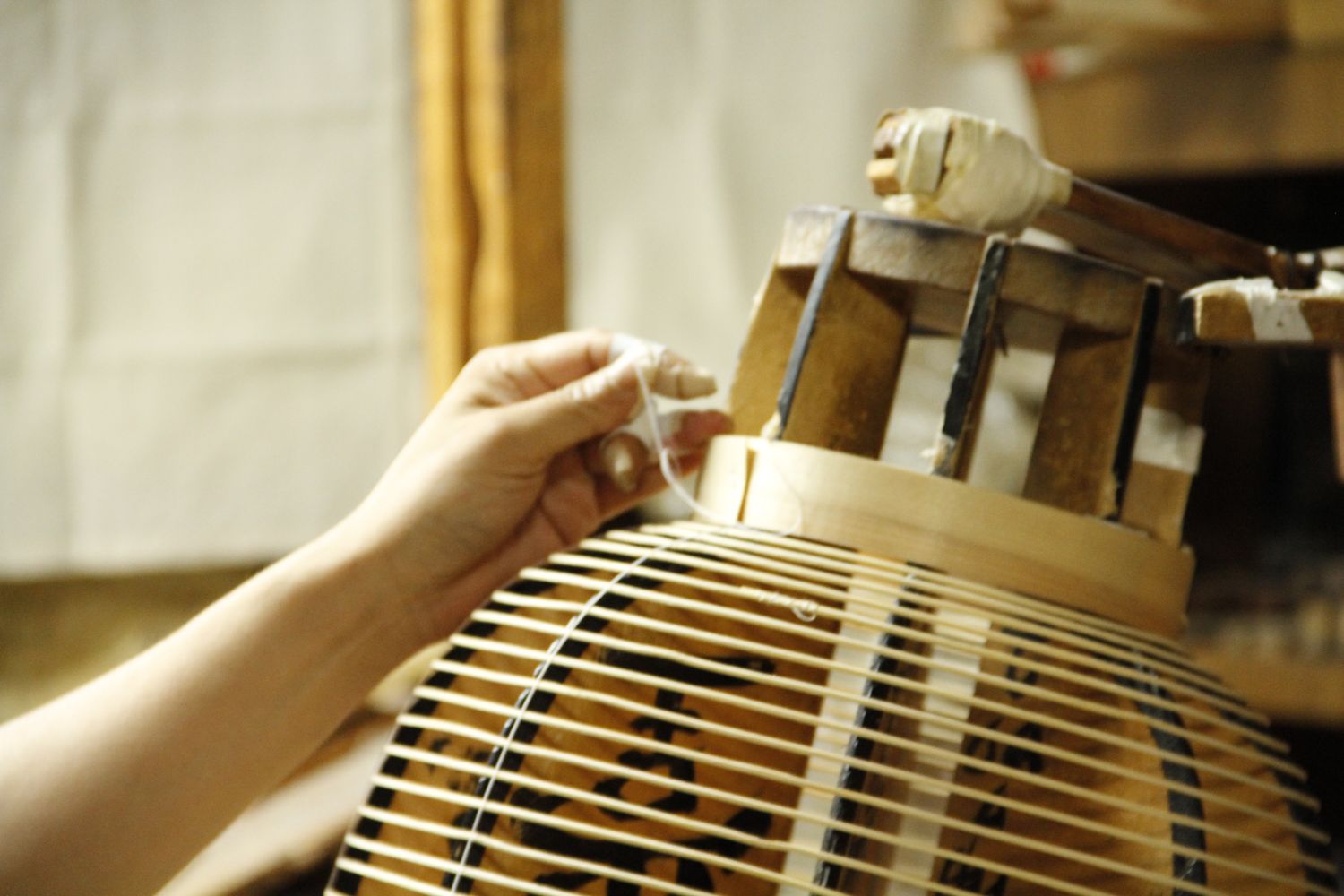
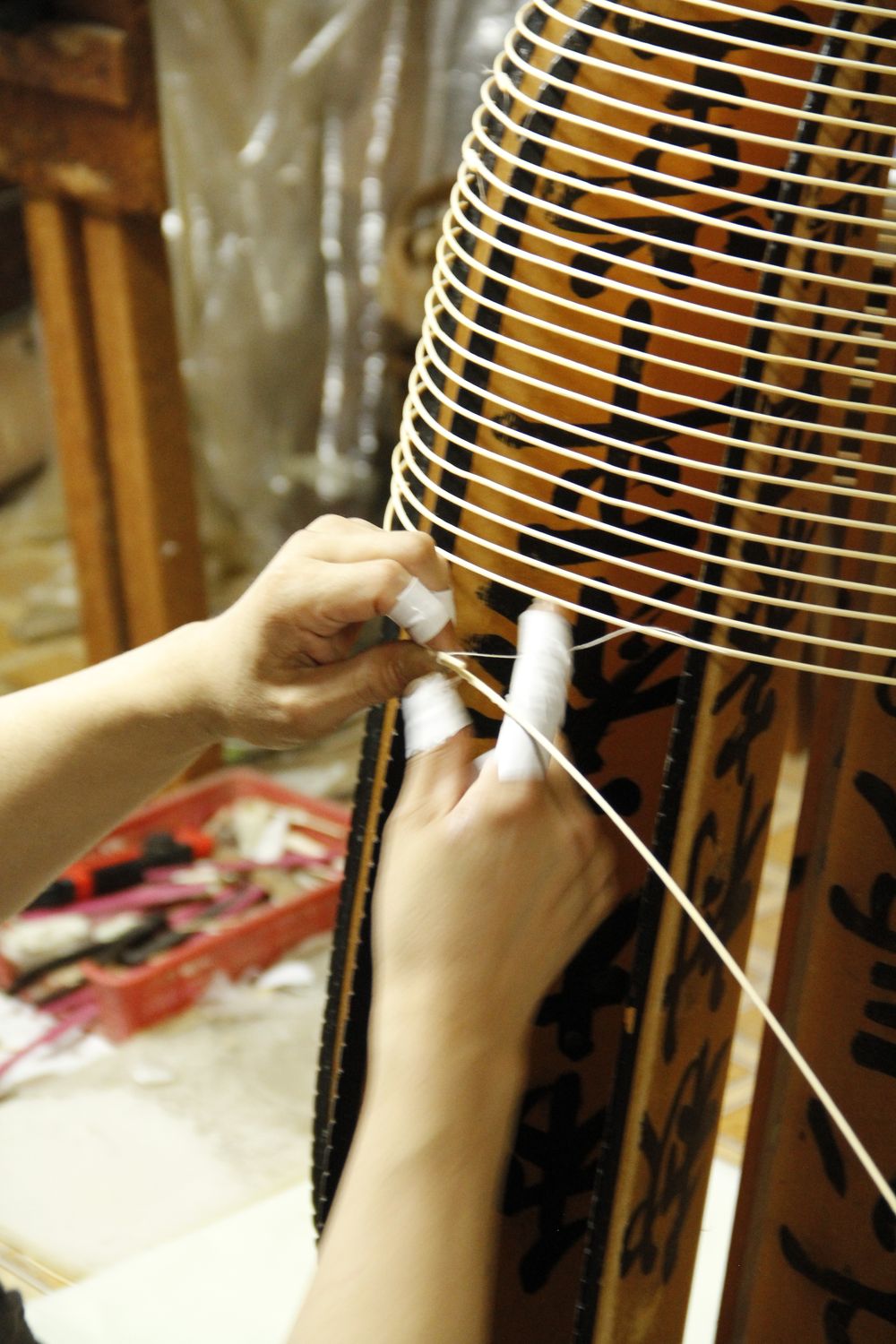
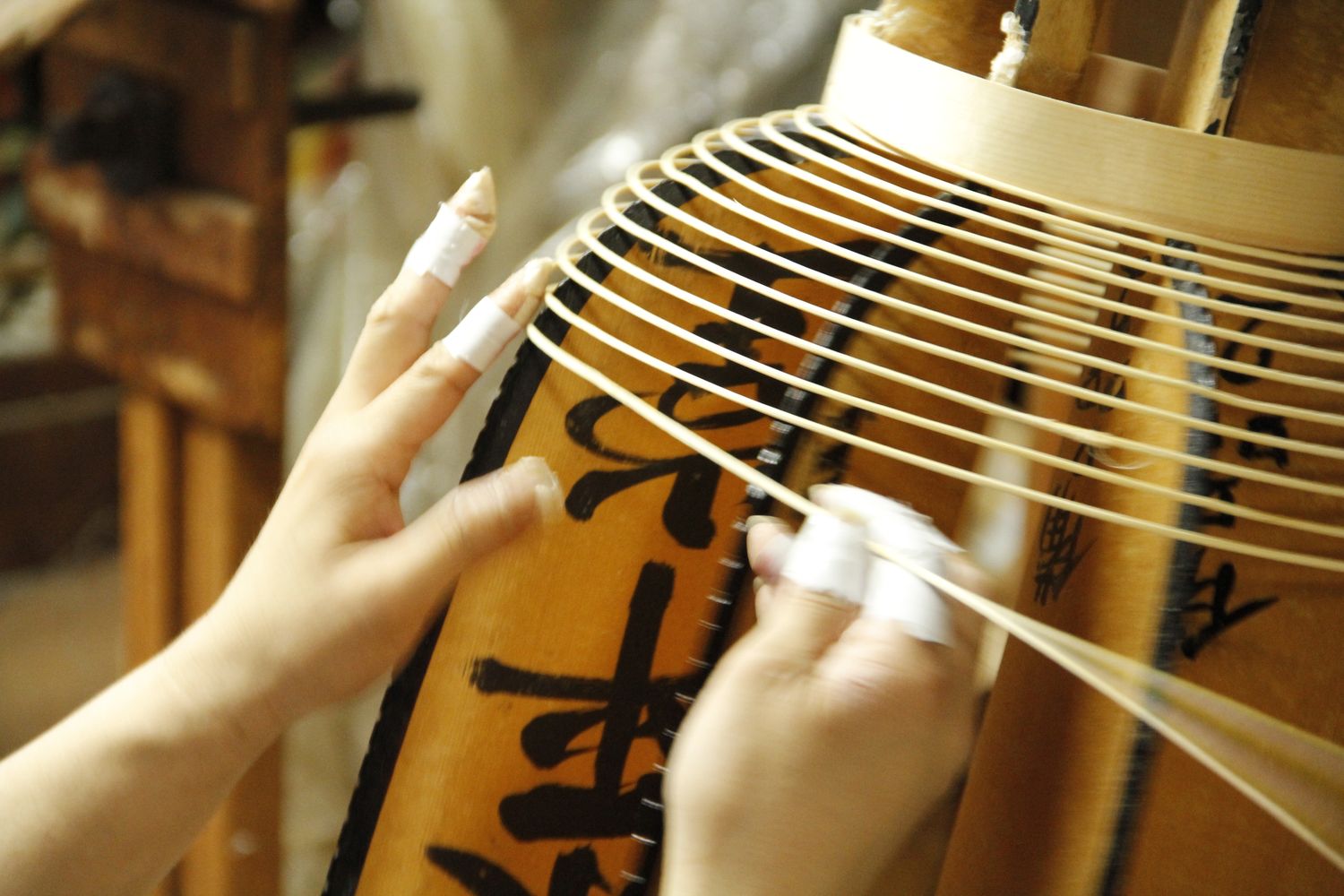
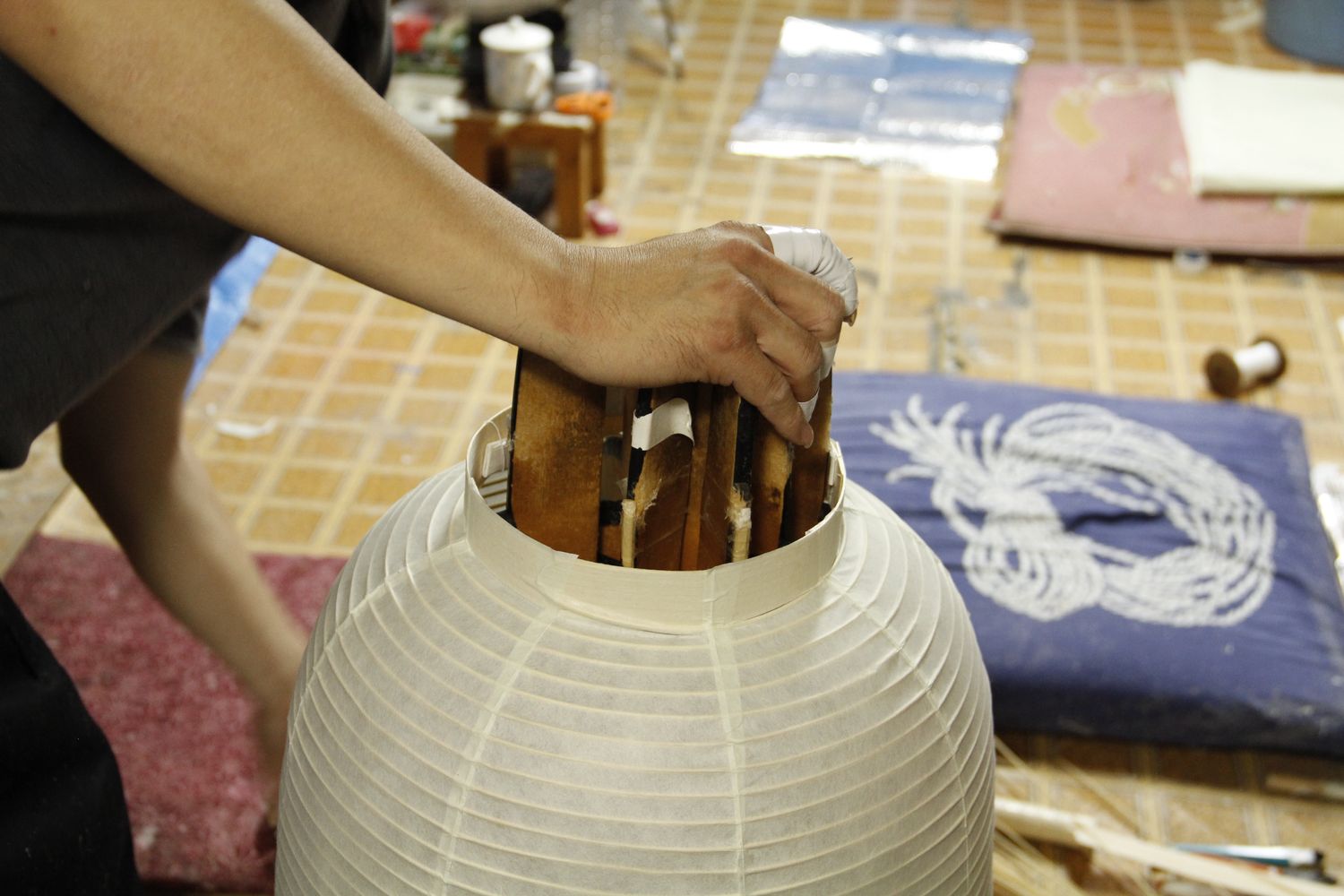
This unique workshop, led by one of the great masters of the discipline, offers a total immersion in the art of chōchin, traditional Japanese lanterns. Participants go through the entire manufacturing process, from assembling the mold to winding the frames, from applying the washi to removing the mold and applying the final coat of paint. They will learn how the Katagumi, a removable wooden mold, works and understand how kōzo and mitsumata fibers influence both the light and durability of the lanterns. This approach combines craftsmanship, exploration of materials, and cultural sensitivity, allowing participants to grasp the technique, aesthetics, and rich heritage of a centuries-old craft.
At the end of the training, trainees will be able to:
This workshop offers a complete immersion in the art of chōchin, traditional Japanese lanterns, guiding participants through all stages of their manufacture: from assembling the mold and winding the frames to applying the paper, removing the mold, and applying the final coat of paint.
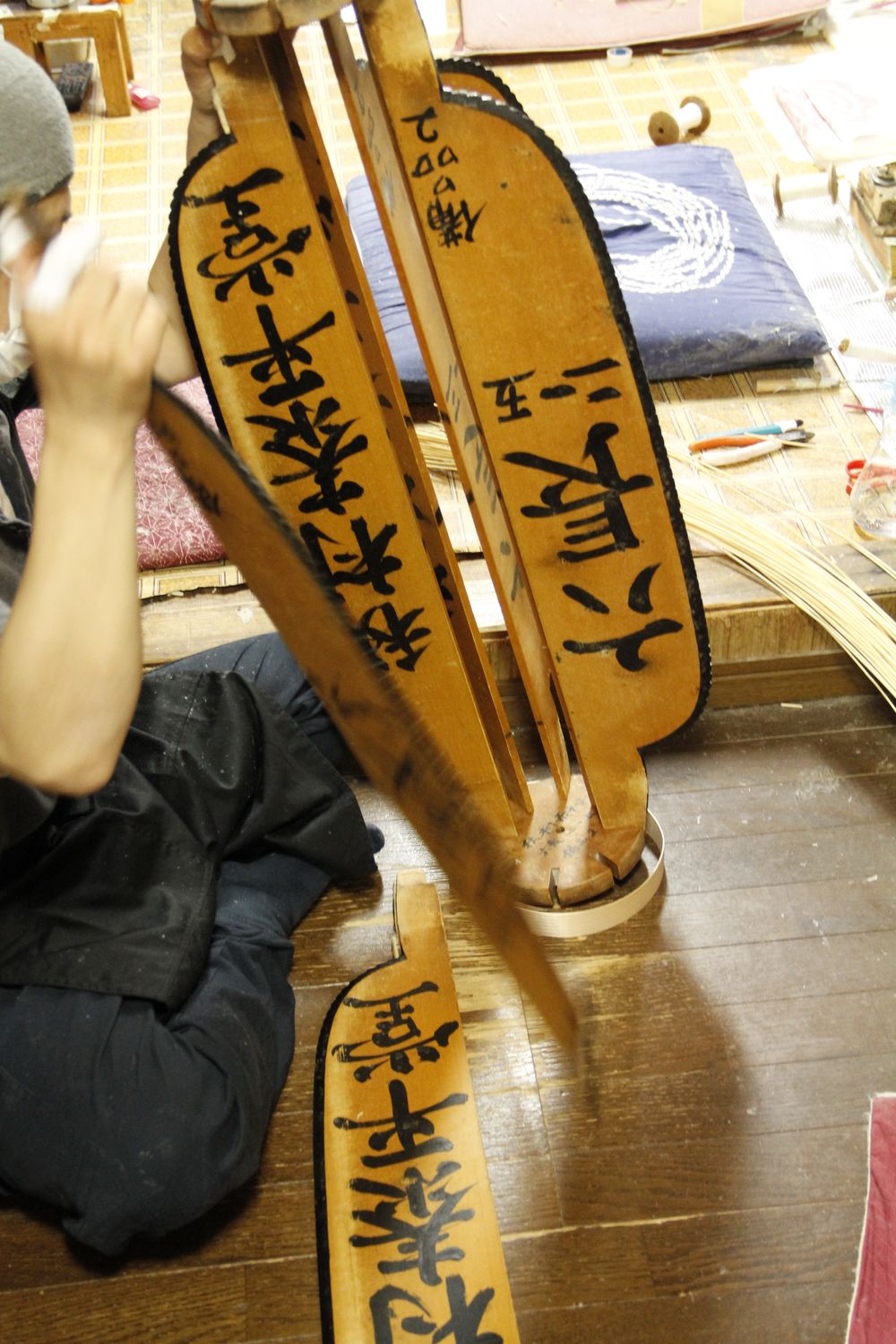
Participants will discover how Katagumi works, an ingenious and precise wooden mold that can be taken apart, and will understand how its structure and folding mechanism influence the construction of the lantern. Special attention will be paid to washi, whose kōzo and mitsumata fibers shape the light and ensure the durability of the object.
The workshop will also address the symbolic dimension of traditional Japanese colors, such as Shu (vermilion) and Sumi (black ink), and their role in the aesthetic and spiritual expression of lanterns. Participants will also reflect on the sustainable economic practices of traditional workshops, which have evolved from fragmented production to integrated and sustainable know-how.
Introduced from China during the Muromachi period, Japanese lanterns are distinguished by their structure of thin bamboo slats covered with washi, housing a flame to guide, signal, or honor ancestors during Obon. Today, they remain rare, but continue to illuminate festivals and izakaya facades, such as the famous lanterns of Yame or Gifu, or the summer celebrations in Osaka, with neighborhood festivals, Jizōbon, and the impressive danjiri of Kishiwada and Sakai.
Schedule
Morning and afternoon
Morning and afternoon
Morning and afternoon
Morning and afternoon
Morning and afternoon
In the heart of Osaka, where neon lights and LED screens have replaced the flickering lights of yesteryear, Akimura Taiheidō, founded in 1921, continues to tirelessly manufacture chōchin, traditional Japanese lanterns. At the head of the company, Keizo Akimura, fourth generation, defends a threatened but essential craft, combining ancestral know-how with contemporary rigor.
Formerly a wholesaler and now an integrated workshop, Akimura Taiheidō allows Keizo Akimura to control every stage of production, from assembling the removable wooden mold to winding the frames, applying the washi paper, and decorating with calligraphy and traditional motifs. In constant contact with researchers, the craftsman explores these techniques using a scientific and analytical approach, guaranteeing solidity, optimal light diffusion, and aesthetic fidelity.
Faced with a decline in the number of craftsmen, Keizo Akimura transformed the company's business model, internalizing production to preserve and defend tradition. Each lantern is designed according to the needs of customers, temples, merchants, or restaurateurs, where logos, patterns, and atmosphere are integrated with precision.
Among his notable achievements is a monumental 2.70-meter lantern for the Kinpusenji temple, a UNESCO site, fifty years after his first delivery. More recently, a collaboration with Beams Japan demonstrated the workshop's ability to engage with the world of fashion, giving tradition a contemporary visibility.
Keizo Akimura's most ambitious project is Akimura Village, a self-sufficient ecosystem dedicated to lanterns: bamboo cultivation, washi paper making, workshops, and the transmission of skills. Scheduled for completion in 2028, it aims to ensure the survival of this living heritage.
For Keizo Akimura, guardian of a century of light, the lantern is no longer a simple object that gives light: it embodies memory, signal, identity. And perhaps, soon, the beating heart of a village entirely devoted to light.
Training 100% financeable by AFDAS, or partially covered by other operators such as FAFCEA, AGEFICE, FIFPL, OPCO EP etc.
If you are concerned, we invite you to contact our sales department in advance via "Request for information" in order to prepare your file, or to register directly via the page of the chosen training course.

89350 Champignelles
T: +33 (0)3 86 45 23 42
contact@campusmana.com
