This workshop explores contemporary textiles as a sculptural medium, enabling the creation of two- and three-dimensional textile surfaces using knotting techniques combined with glass tubes and miscanthus. Participants will work with and 3D-print an innovative, bio-based material, adding texture and tactile quality to each creation. A space where traditional techniques and contemporary experimentation come together to give rise to original and sustainable works.
By the end of the course, participants will be able to:
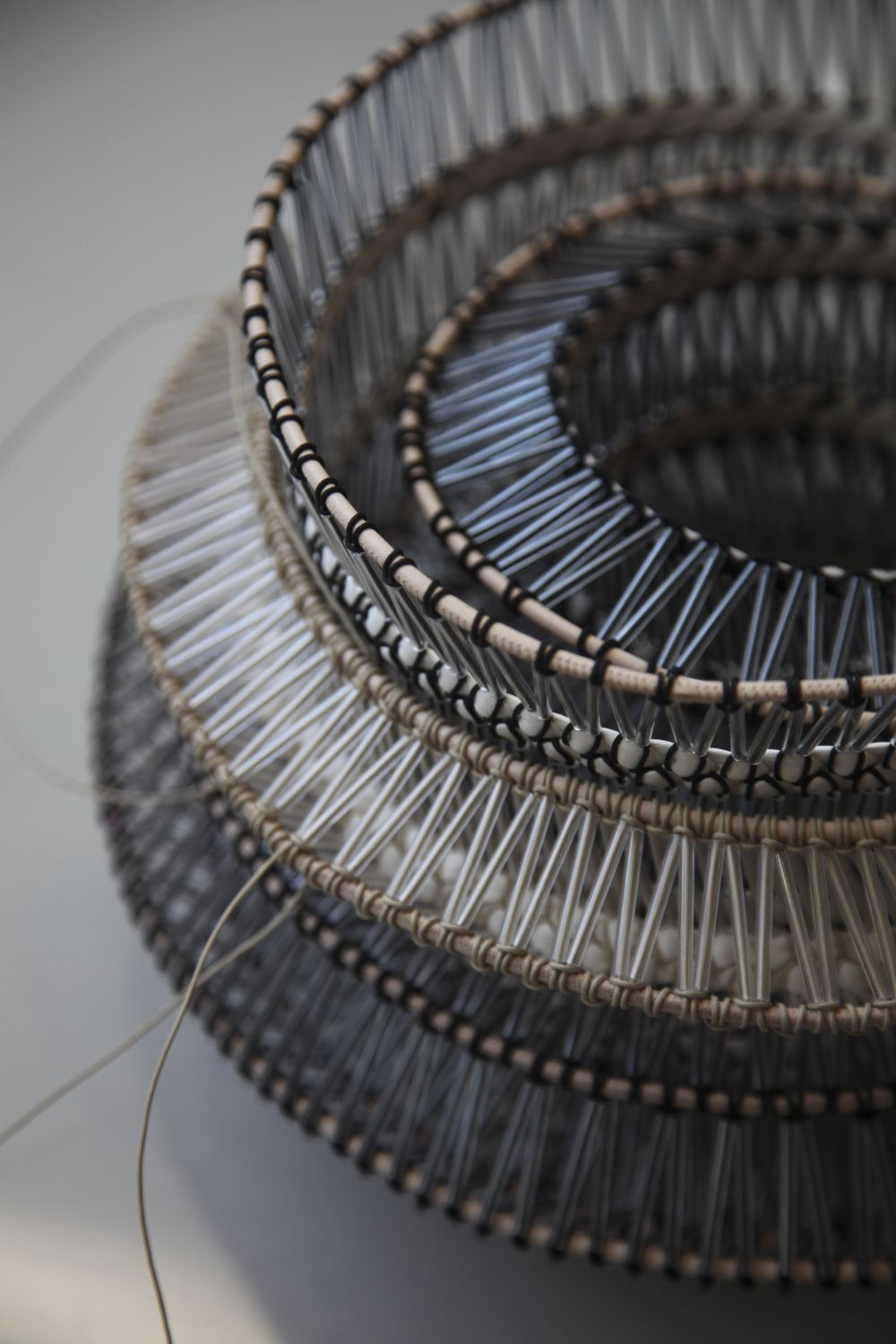
This workshop invites participants to explore thread as a creative medium—beyond traditional textiles—to design unique three-dimensional forms and sculptures. Through an approach that is both technical and experimental, each participant will learn to transform cords and tubular beads into sculptural surfaces and structures, while developing their own artistic vision.
The program allows participants to work in progressive stages: composing strips, creating panels and patterns, then assembling them into cylindrical forms and structures in space. Drawing and sketching are used as design tools to imagine novel forms, which each participant can then bring to life. The goal: to develop a personal, original, and expressive piece that reflects a unique creative universe.
The workshop also incorporates the use of Novifil filament, an innovative and sustainable material. Bio-based, biodegradable, and free of petrochemical additives, Novifil combines a plant-based polymer (PLA) with natural miscanthus fibers. Grown near Fontainebleau, this perennial grass requires neither irrigation nor chemical inputs, promotes biodiversity, and captures carbon. Creations made with Novifil reveal an organic texture and a natural golden hue that glows in the light and enriches the forms.
Beyond the technical aspects, Marion Chopineau and Alexandre Carpentier invite participants to rethink the relationship between the hand, the machine, and the material, offering a creative space where precision, sensitivity, and ecological awareness converge. Participants will leave with new skills, hands-on experience, and a finished piece that reflects their own creative language.
The workshop will focus on learning how to 3D-print miscanthus tubes, with pairs of participants formed each day.
Flat decorations and sculpted volumes made from textile cords and tubular beads
Morning
Afternoon
Morning
Afternoon
Morning
Afternoon
Morning
Afternoon
Morning
Afternoon
Trained in applied arts at the École Olivier de Serres in Paris, Marion Chopineau has developed a practice at the intersection of textile design and formal research. She collaborates with major fashion houses, for which she designs embroidery, accessories, and experimental pieces, while pursuing personal work focused on the transformation of craftsmanship.
Her approach is based on the hybridization of techniques: basketry, macramé, knitting, and molding come together in installations where the textile becomes structure. By repurposing and combining these practices, she develops a unique visual vocabulary that is both technical and sensitive.
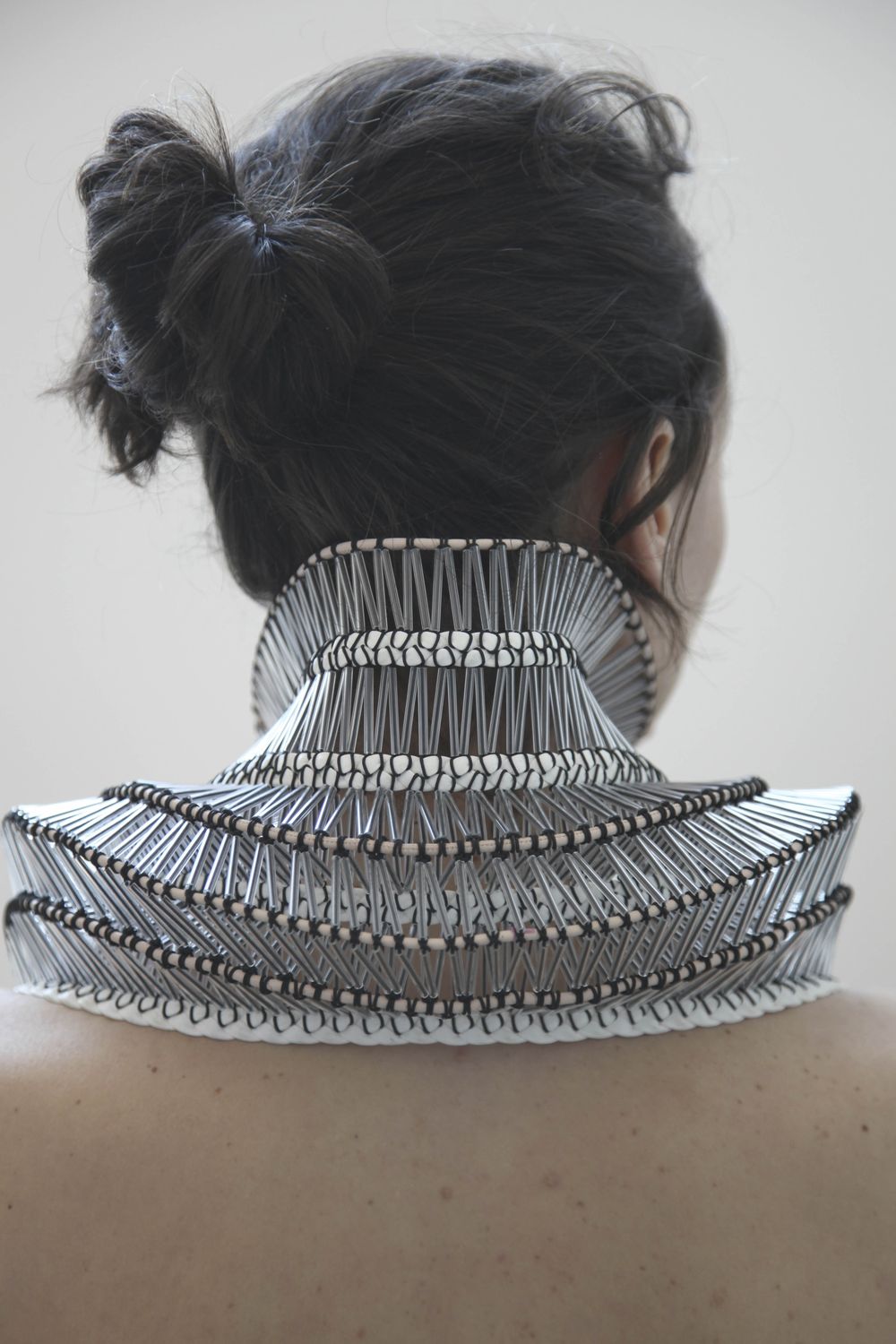
The question of volume is central to her work. Through circular weaving or molding directly on the body, she creates forms that oscillate between object, adornment, and architecture. Her pieces, composed of networks of threads and modules, evoke light, almost immaterial constructions, straddling the boundary between structure and the organic.
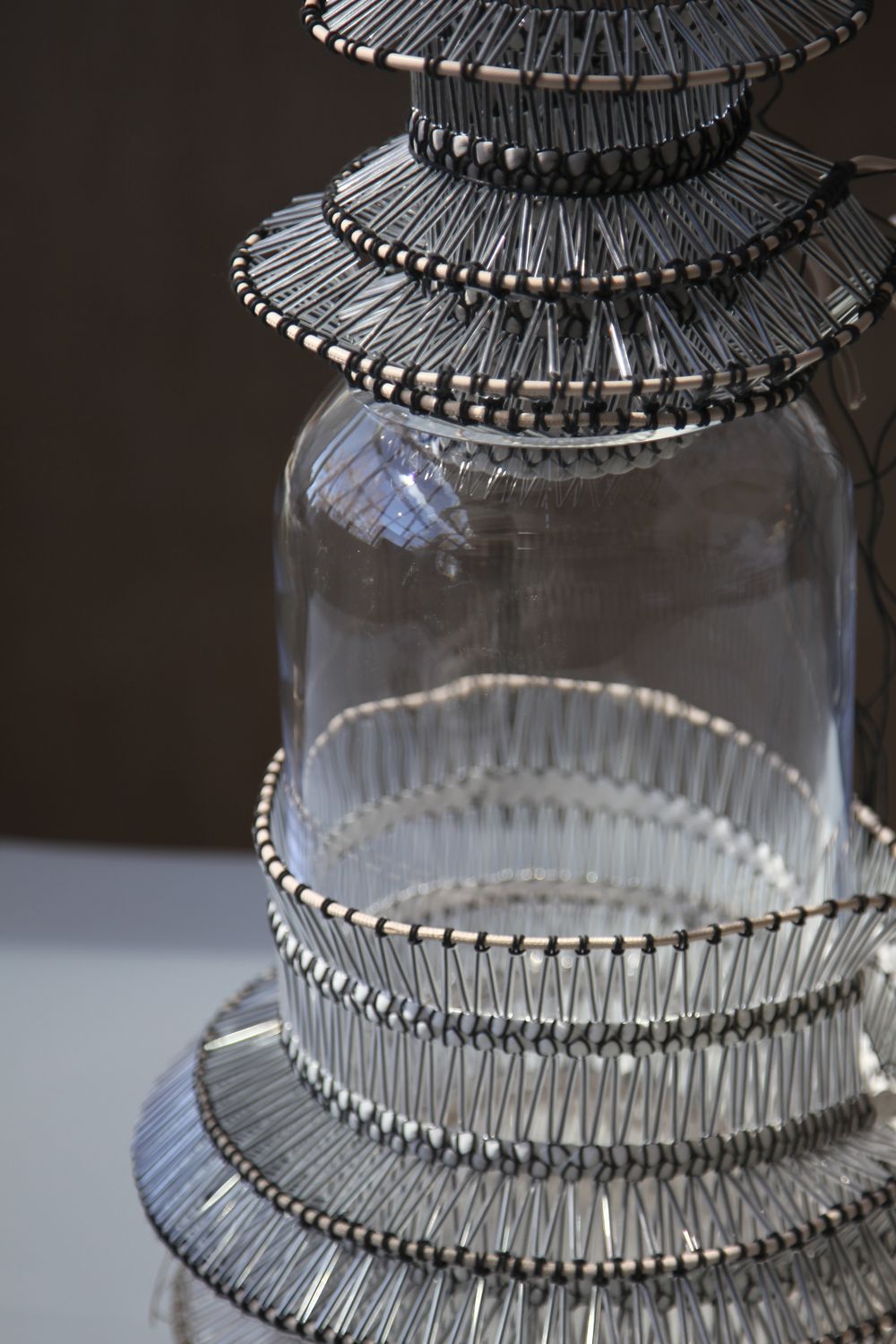
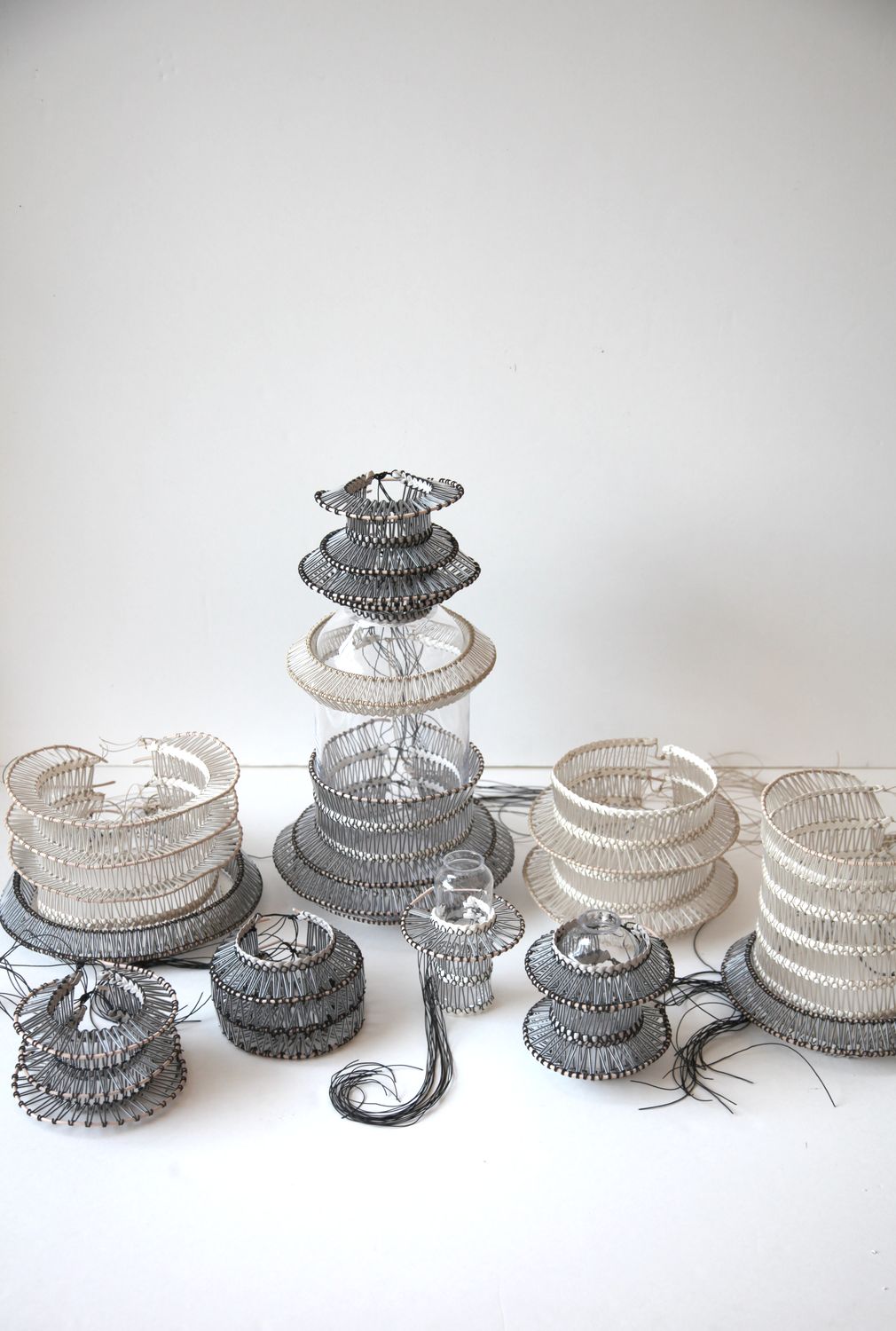
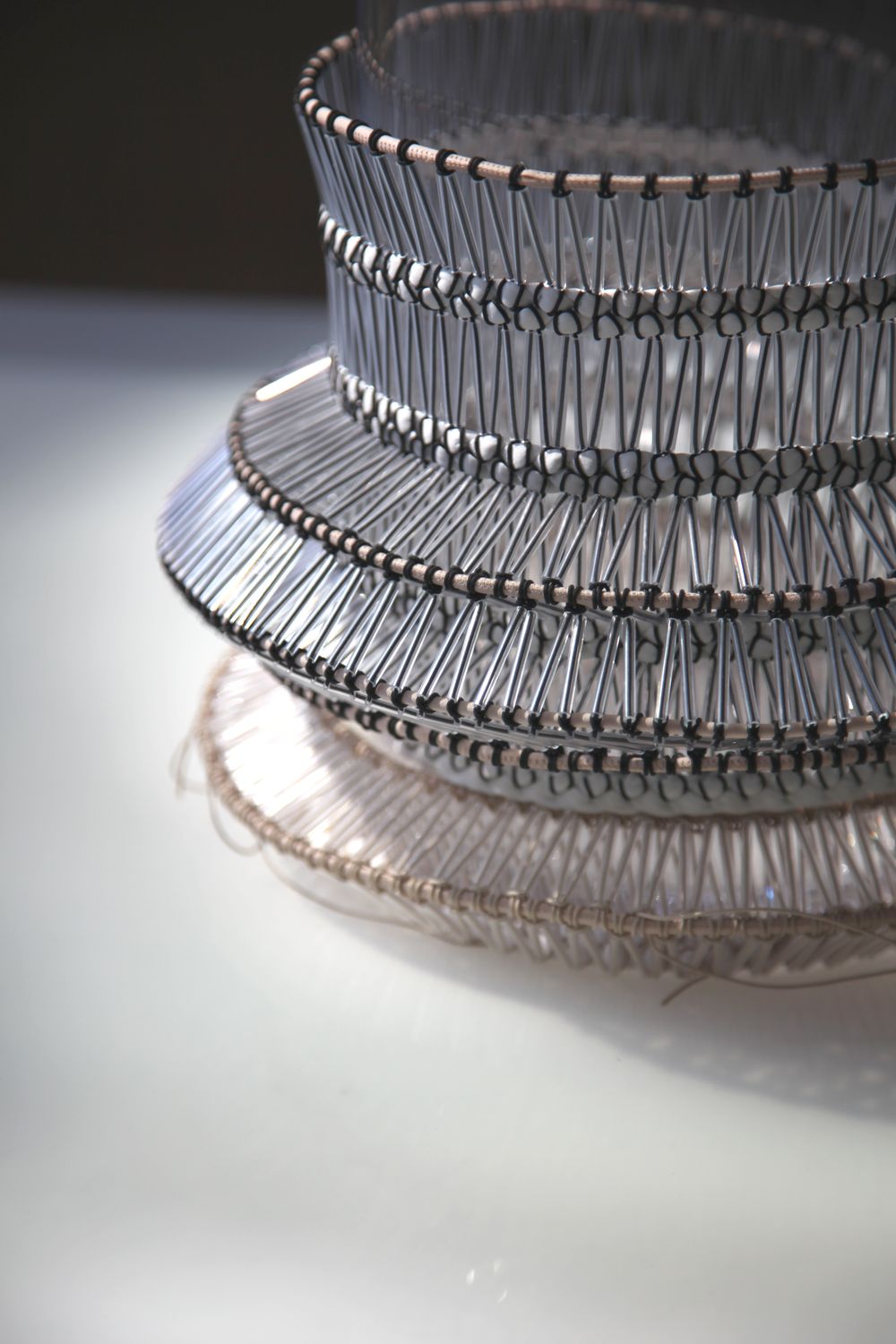
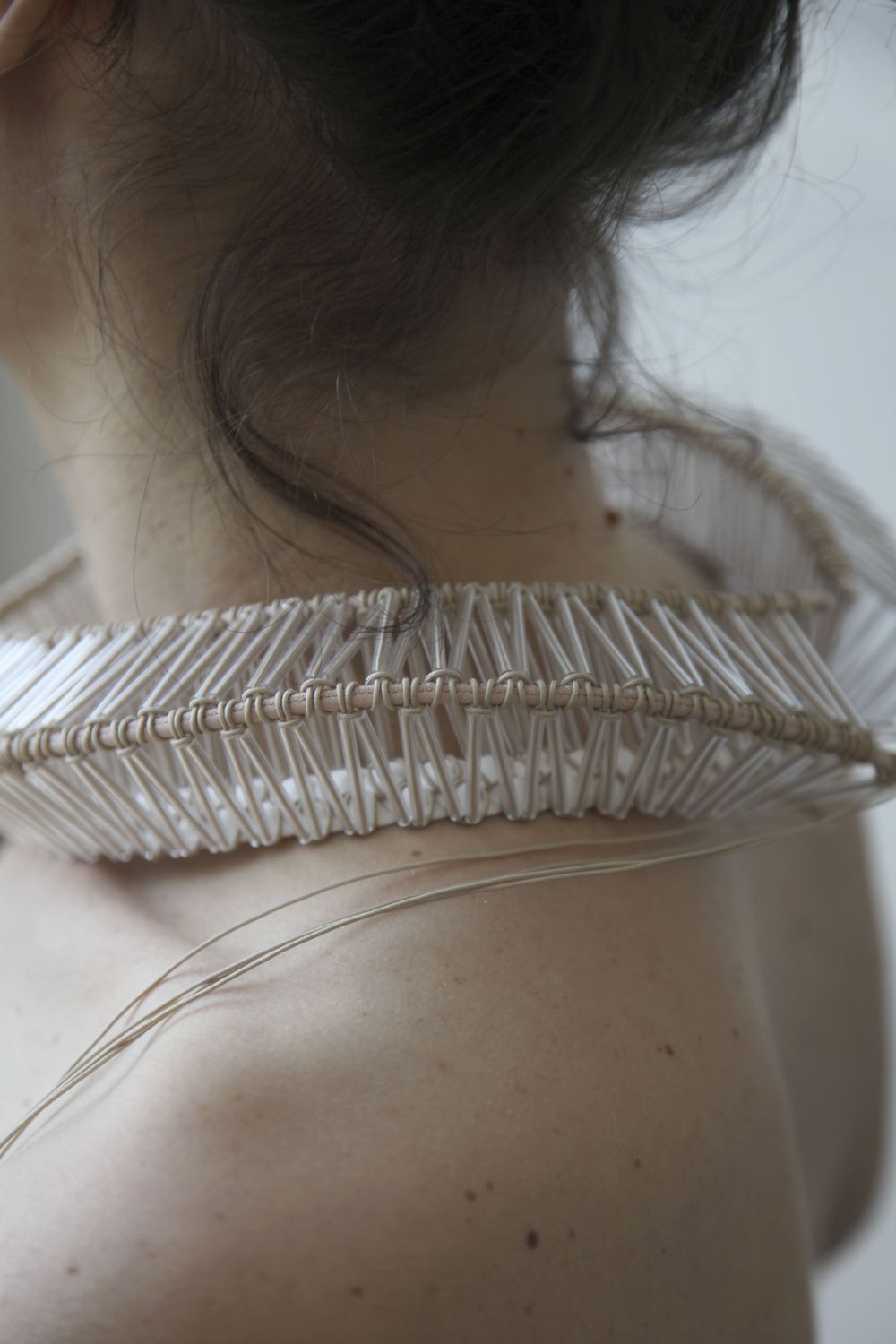
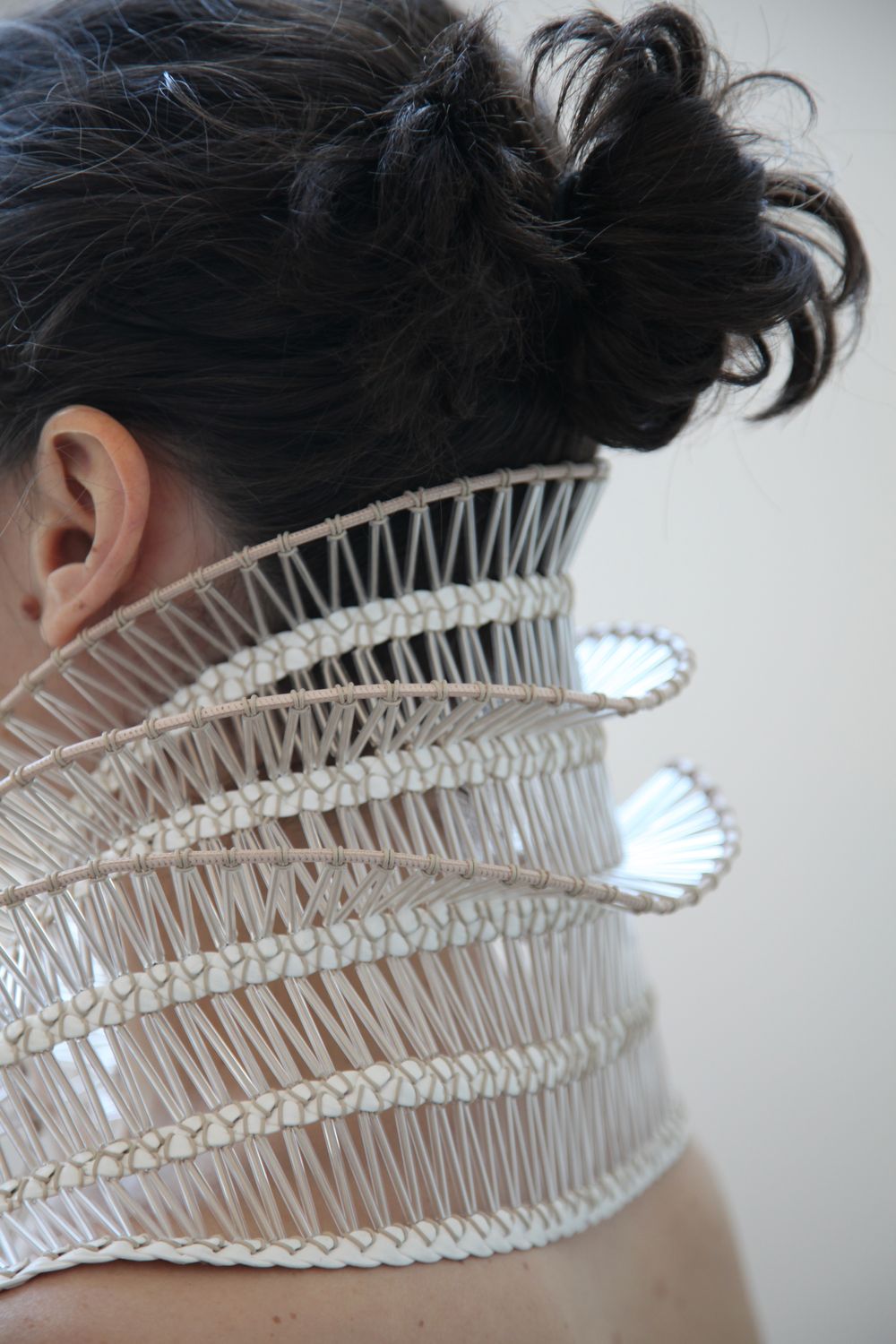
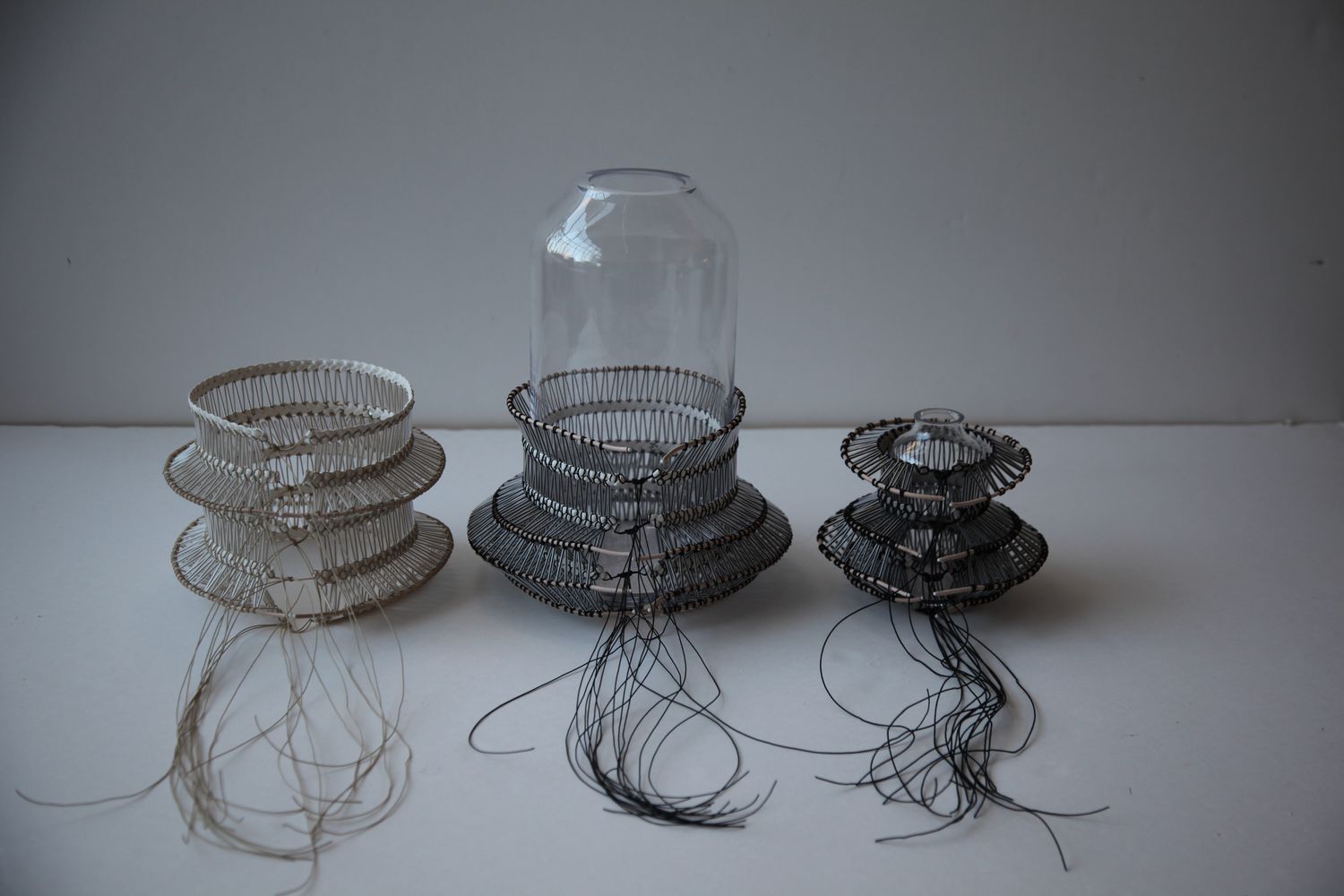
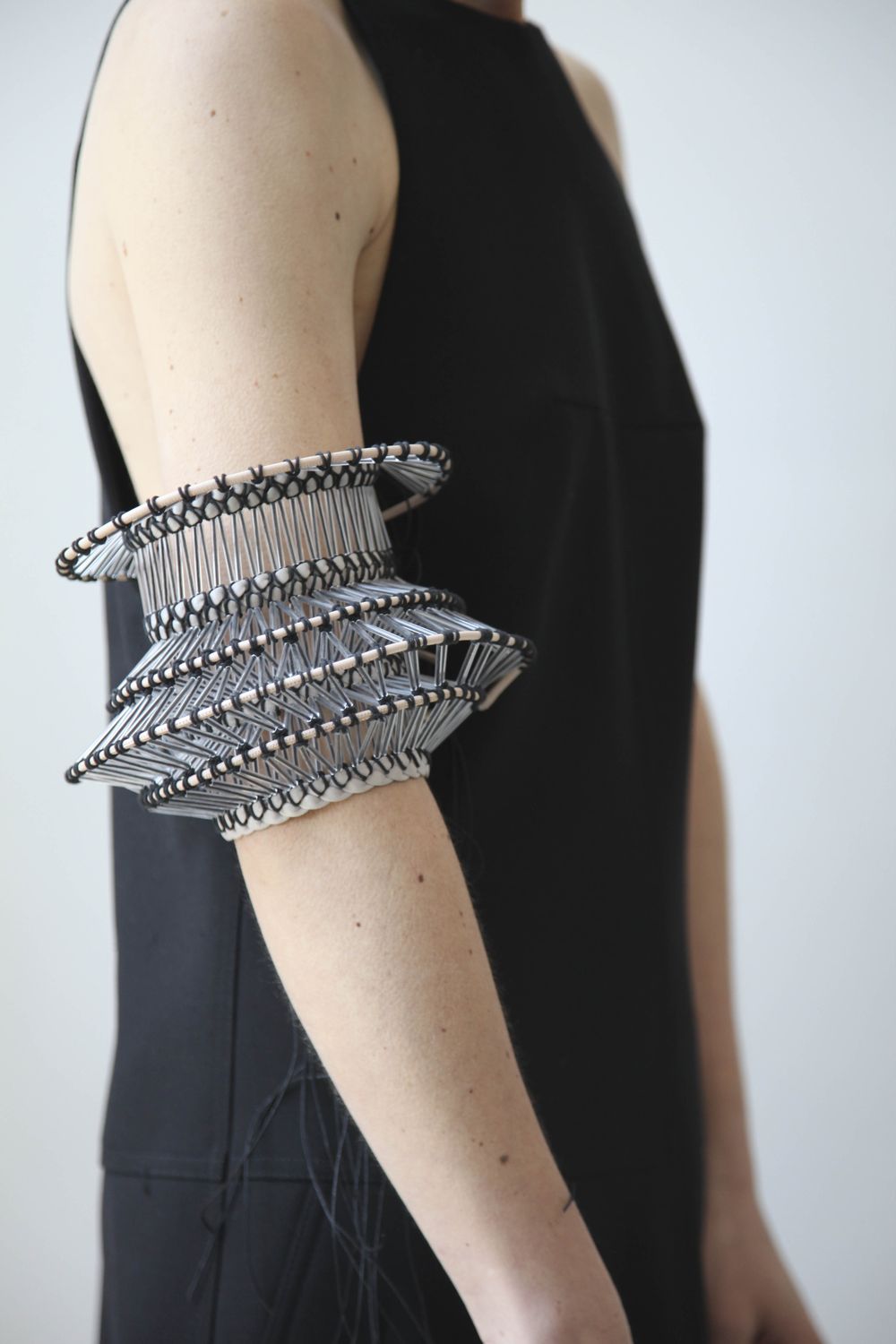
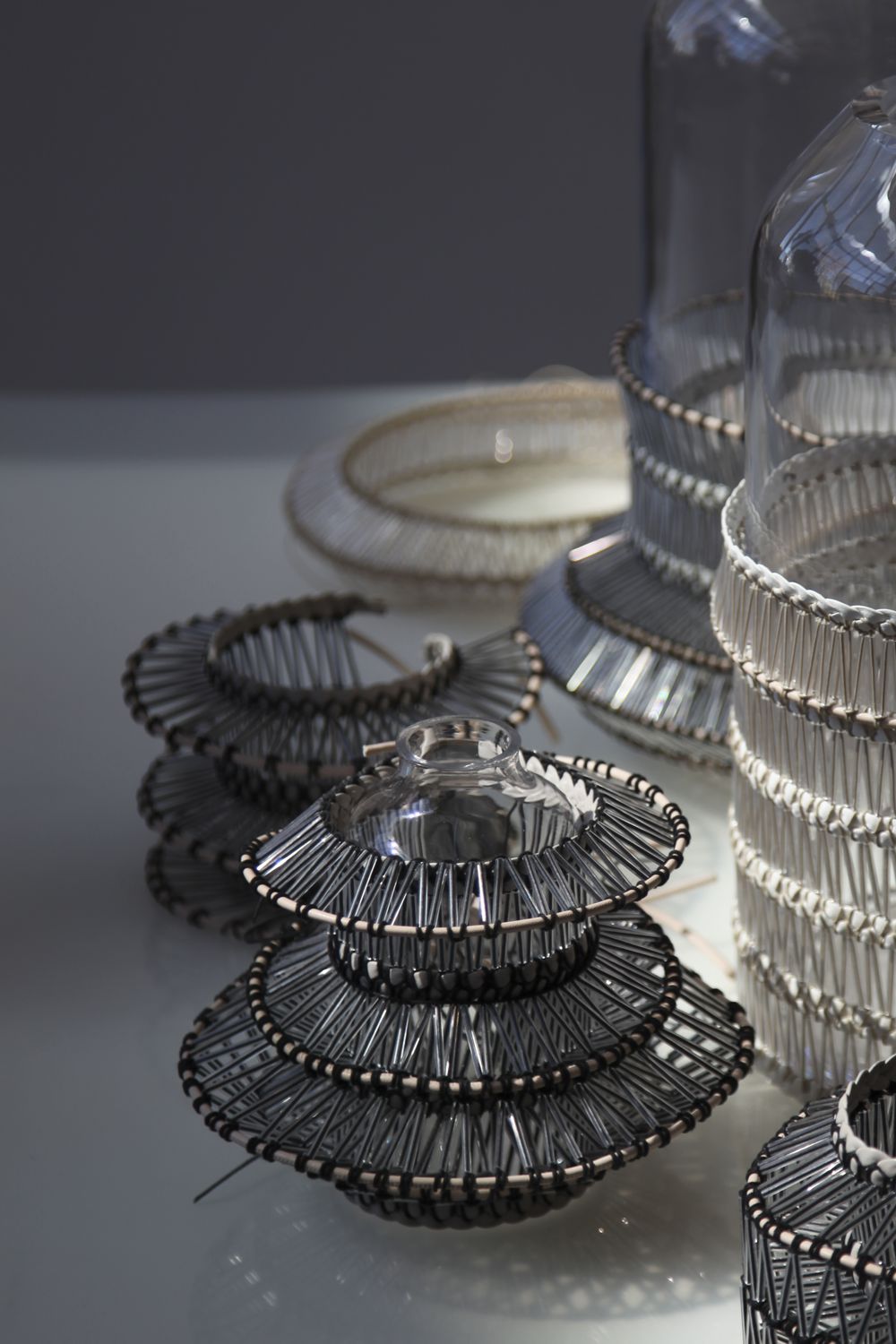
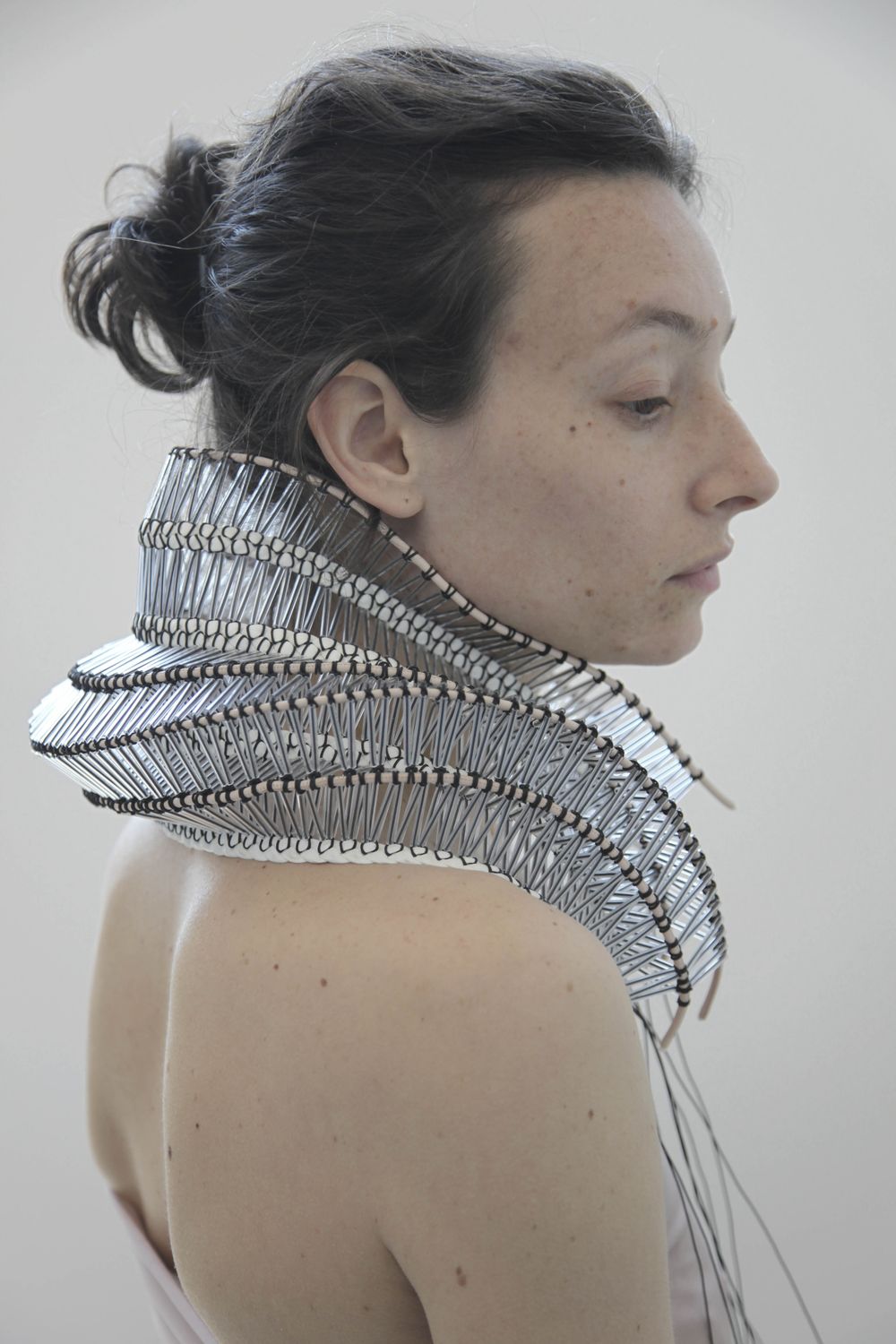
The Parures-Matriochkas extend this exploration. Composed of glass and threads, they are structured as nested volumes, capable of conforming to the body or breaking free from it. At the intersection of jewelry and basketry, these works rely on repetitive knotting techniques, rooted in a long-term process where the gesture becomes the process itself.
Their fragmented geometry evokes multiple references: measuring instruments, celestial forms, architectural structures. These objects bring to mind dials, spheres, or meridians, situating the piece within a broader reflection on cycle, rhythm, and transformation.
Conceived as wearable architecture, these adornments retain the memory of the body while existing autonomously. They oscillate between protection and ornamentation, between structure and envelope, affirming a vision of textiles as a space of construction, both formal and symbolic.
Training 100% financeable by AFDAS, or partially covered by other operators such as FAFCEA, AGEFICE, FIFPL, OPCO EP etc.
Accommodation and meals included
If you are concerned, we invite you to contact our sales department in advance via "Request for information" in order to prepare your file, or to register directly via the page of the chosen training course.

89350 Champignelles
T: +33 (0)3 86 45 23 42
contact@campusmana.com